
Adverse Drug Reaction Classifier
Reaction Information
Classification Result
Probability of Type A: | Probability of Type B:
Key characteristics:
When you take a medication, you expect it to help-not hurt. But sometimes, even the right drug at the right dose can cause unexpected problems. Not all side effects are the same. Some are common, predictable, and tied to how much you take. Others are rare, strange, and seem to come out of nowhere. Understanding the difference between Type A and Type B adverse drug reactions isn’t just for doctors-it’s key to knowing what’s normal, what’s dangerous, and when to act.
What Are Type A Adverse Drug Reactions?
Type A reactions are the most common kind of drug side effect-making up 85 to 90% of all adverse reactions. They’re predictable because they’re just an extension of the drug’s normal action in your body. If a drug lowers blood pressure, a Type A reaction might be your blood pressure dropping too low. If it irritates your stomach, you might get nausea or ulcers. These reactions follow a clear dose-response pattern: more of the drug means more of the side effect.
Think of it like turning up the volume on a speaker. Too loud? You hear distortion. That’s Type A. Common examples include:
- Stomach upset from NSAIDs like ibuprofen (affects 15-30% of users)
- Low blood pressure after starting lisinopril (seen in 10-20% of patients)
- Liver damage from taking more than 4,000 mg of acetaminophen in a day
- Drowsiness from antihistamines like diphenhydramine
These reactions happen to almost anyone given a high enough dose. That’s why dosing matters so much. A 70-year-old on blood thinners, for example, might need a lower dose than a 30-year-old because their body processes the drug differently. Type A reactions are usually mild, but they can turn serious if ignored. That’s why doctors monitor lab values, adjust doses, and ask about symptoms during follow-ups.
What Are Type B Adverse Drug Reactions?
Type B reactions are the opposite of Type A. They’re rare-only 5 to 10% of all adverse reactions-but they’re responsible for about 30% of hospitalizations due to drug problems. These are unpredictable. They don’t follow dose patterns. You could take the same dose as someone else and have no reaction, while they end up in the ER. That’s because Type B reactions aren’t about the drug’s intended effect-they’re about your body’s unusual response to it.
Most Type B reactions are immune-driven. Your immune system mistakes the drug (or a piece of it) for a threat and attacks. Examples include:
- Stevens-Johnson syndrome from sulfonamides (1-6 cases per million prescriptions)
- Anaphylaxis from penicillin (0.01-0.05% of courses)
- Malignant hyperthermia from anesthesia (1 in 15,000-50,000 exposures)
- Drug-induced lupus from hydralazine or procainamide
These reactions can be deadly. Unlike Type A, you can’t prevent them by lowering the dose. The only real strategy is to avoid the drug entirely if you’ve had a prior reaction. That’s why allergy histories matter so much. If you broke out in a rash after amoxicillin as a kid, you’re not just "sensitive"-you’re at risk for a serious Type B reaction if you take it again.
Type A vs Type B: The Key Differences
Here’s how these two types stack up side by side:
| Feature | Type A | Type B |
|---|---|---|
| Frequency | 85-90% of all ADRs | 5-10% of all ADRs |
| Predictability | High-based on pharmacology | Low-idiosyncratic, no pattern |
| Dose Relationship | Direct and linear | No clear threshold |
| Onset | Usually fast-hours to days | Variable-days to weeks, sometimes months |
| Mechanism | Pharmacological extension | Immune or metabolic idiosyncrasy |
| Prevention | Dose adjustment, monitoring | Avoidance in susceptible individuals |
| Mortality Risk | Less than 5% | 25-30% |
The big takeaway? Type A is about quantity-how much you take. Type B is about quality-how your body reacts. One can often be managed. The other usually requires stopping the drug forever.
The Expanded Six-Type System (A-F)
While Type A and B are the foundation, modern pharmacovigilance uses a more detailed system: Types A through F. This isn’t just academic-it changes how drugs are monitored and how patients are protected.
- Type C: Chronic effects from long-term use. Think adrenal suppression after months of prednisone, or osteoporosis from prolonged corticosteroids. These develop slowly and are often missed because they’re blamed on aging.
- Type D: Delayed reactions that show up years later. The classic example is diethylstilbestrol (DES), a drug given to pregnant women in the 1950s-60s to prevent miscarriage. Decades later, their daughters developed a rare vaginal cancer. These reactions are rare but devastating.
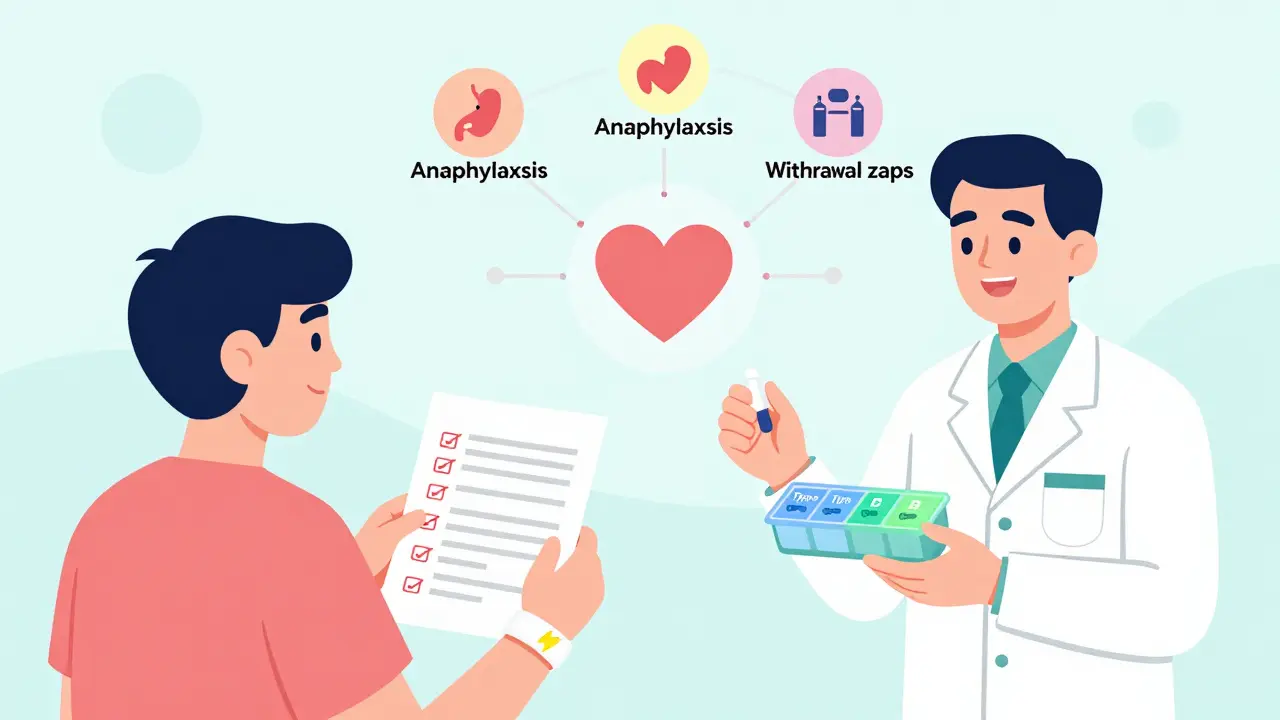
- Type E: Withdrawal reactions. When you stop a drug, your body reacts. Opioid withdrawal is the most obvious-sweating, nausea, anxiety. But even antidepressants like paroxetine can cause dizziness and brain zaps if stopped too quickly.
- Type F: Therapeutic failure. This isn’t a side effect-it’s when the drug doesn’t work. Rifampin, for example, speeds up how fast your body breaks down birth control pills. If you’re on both, you might get pregnant even though you’re taking your pill every day. This is often misclassified as patient noncompliance.
These categories help explain why some problems show up months after starting a drug, or why stopping a drug can be just as dangerous as taking it. The six-type system is now used in 92% of European pharmacovigilance centers and is becoming the global standard by 2025 under ICH guidelines.
Why the Immunological Classification Matters Too
Type B reactions are often immune-mediated, and that’s where the Types I-IV system comes in. It breaks down allergic reactions by mechanism:
- Type I (IgE-mediated): Immediate, life-threatening. Think anaphylaxis from penicillin or bee stings. Happens within minutes to hours.
- Type II (Cytotoxic): Antibodies attack your own cells. Drug-induced hemolytic anemia from methyldopa or penicillin is an example.
- Type III (Immune Complex): Clumps of drug-antibody particles trigger inflammation. Serum sickness from cefaclor causes fever, joint pain, and rash.
- Type IV (Cell-mediated): Delayed reaction, T-cell driven. Maculopapular rashes from amoxicillin or allopurinol fall here. Often appears 7-14 days after starting the drug.
This system gives doctors the tools to diagnose the cause of a rash or fever after a drug-not just say "it’s an allergy." It also helps guide testing. For example, if you had a Type I reaction to penicillin, you might get a skin test before trying a related antibiotic. If you had a Type IV rash from amoxicillin, you might still be able to safely take a different class of antibiotics.
Real-World Challenges: When Classification Gets Messy
Here’s the truth: medicine isn’t neat. About 15% of adverse reactions don’t fit cleanly into Type A or B. Some show partial dose dependence. Others look like an infection but are actually drug-induced. Carbamazepine, a seizure drug, can cause low sodium levels. Is that Type A (dose-related) or Type B (idiosyncratic)? Studies show sodium drops as the dose goes up-but not everyone gets it. So it’s both.
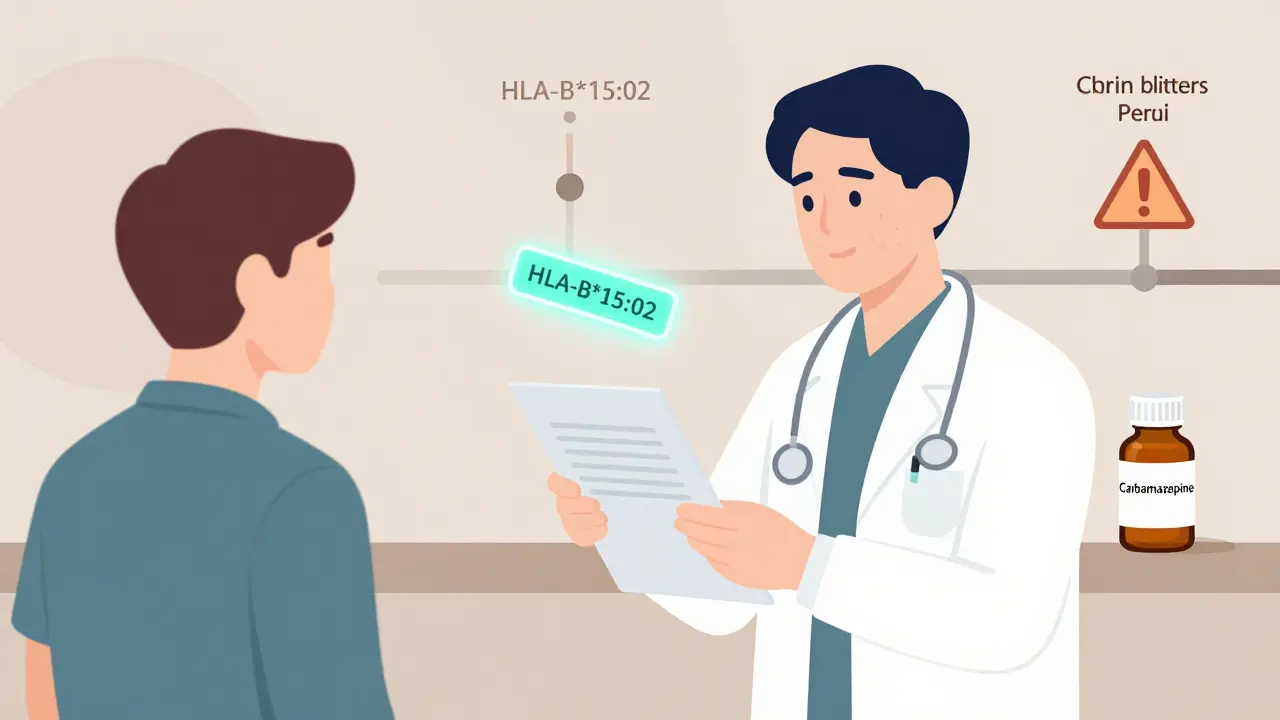
Genetics are changing the game. What used to be called "Type B" is now being linked to specific genes. For example, people with the HLA-B*15:02 gene are at high risk for Stevens-Johnson syndrome from carbamazepine. Test for the gene, and you can avoid the reaction before it starts. That’s not idiosyncratic anymore-it’s predictable.
And then there’s Type F: therapeutic failure. Many doctors miss this. A woman on birth control gets pregnant because she took rifampin for tuberculosis. She’s not "noncompliant." The drug interaction is the culprit. That’s a Type F reaction-and it’s preventable if you know to ask about all medications.
What Should You Do?
If you’re a patient:
- Keep a list of every drug you’ve taken-and any reaction you had, even if it was "just a rash."
- Ask: "Could this be the drug?" Don’t assume it’s just a cold or stress.
- If you’ve had a serious reaction (swelling, trouble breathing, blistering skin), wear a medical alert bracelet.
- Don’t assume a drug is safe just because your friend took it. Your body is different.
If you’re a provider:
- Use the six-type system for serious cases, not just A/B.
- Check for drug interactions before prescribing-especially antibiotics, antifungals, and seizure meds.
- Know when to order genetic testing (HLA-B*15:02 before carbamazepine, HLA-B*57:01 before abacavir).
- Report every serious reaction to MedWatch or your local pharmacovigilance center. Your report could save a life.
The bottom line: Type A reactions are common, manageable, and often avoidable with good dosing. Type B reactions are rare but dangerous, and they demand respect. The best protection isn’t just knowing the classification-it’s knowing your patient, your drugs, and your limits.
Frequently Asked Questions
Are all side effects adverse drug reactions?
No. Not every side effect is harmful. For example, weight gain from an antidepressant might be unwanted, but if it doesn’t cause health problems, it’s not classified as an adverse drug reaction. ADRs are defined as harmful, unintended responses that occur at normal doses. Mild, non-harmful effects like dry mouth from antihistamines are side effects, but not ADRs unless they lead to complications like dental decay or urinary retention.
Can Type B reactions happen on the first dose?
Yes. While some Type B reactions require prior exposure (like a second allergic response to penicillin), others can occur on the first dose. This is especially true with drugs that trigger immune responses without needing prior sensitization, such as certain antibiotics or anticonvulsants. In these cases, the body’s immune system misidentifies the drug as a threat right away, leading to reactions like anaphylaxis or Stevens-Johnson syndrome.
Why do some people get Type B reactions and others don’t?
It’s mostly genetic. Differences in how your liver metabolizes drugs, how your immune system recognizes foreign substances, or how your cells respond to stress can make you more vulnerable. For example, people of Southeast Asian descent with the HLA-B*15:02 gene are far more likely to develop severe skin reactions from carbamazepine. Others may have slower drug clearance or altered immune signaling. These factors combine in unpredictable ways-making Type B reactions truly idiosyncratic.
Is there a test to predict Type B reactions?
For a few specific drugs, yes. Genetic tests exist for HLA-B*15:02 before carbamazepine, HLA-B*57:01 before abacavir, and TPMT before thiopurines. These are standard of care in many countries. But for most Type B reactions-like anaphylaxis to penicillin or serum sickness from cefaclor-there’s no reliable pre-test. That’s why a detailed drug history and cautious prescribing remain the best tools.
Can Type A reactions turn into Type B?
Not directly, but they can mask or trigger them. For example, a Type A rash from amoxicillin might look like a common viral rash. If the patient is actually developing a Type IV immune reaction, it can be missed. Over time, repeated exposure to a drug might sensitize the immune system, turning a mild Type A effect into a later Type B reaction. That’s why even minor side effects should be documented and taken seriously.
How do I know if a reaction is serious enough to report?
If it caused hospitalization, disability, birth defects, death, or required intervention (like steroids or epinephrine), it’s reportable. Even if you’re not sure if it’s Type A or B, report it. Pharmacovigilance systems rely on real-world data to spot patterns. In 2022, over 1.2 million ADR reports were filed in the U.S. through MedWatch-and many led to updated warnings or even drug withdrawals. Your report matters.
What Comes Next?
The future of drug safety is moving beyond binary labels. With AI analyzing millions of patient records and genetic testing becoming routine, we’re starting to turn "unpredictable" reactions into preventable ones. By 2027, researchers predict that 60% of what we now call Type B reactions will have identifiable genetic triggers.
But for now, the Type A and Type B framework still works. It’s simple. It’s practical. And it saves lives every day. Whether you’re taking a pill or prescribing one, knowing the difference isn’t just knowledge-it’s a safety net.



Type A is just the drug doing its job too hard. Type B is your body going full traitor. No middle ground. Just take the pill and hope.
This is one of the clearest explanations I've seen on ADRs. The six-type system is essential for clinicians, especially when dealing with polypharmacy in elderly patients. Genetic testing for HLA variants is becoming standard in many Indian hospitals too.
The distinction between Type F and noncompliance is critical. I've seen patients labeled as nonadherent when they were actually on rifampin or St. John's wort. Always check the full med list before assuming.
Type B reactions are the universe’s way of saying ‘you thought you were special, huh?’ One minute you’re fine, next you’re in the ER with a rash that looks like a Jackson Pollock painting. And no, lowering the dose won’t help. Your body just hates you today.
I had a Type B reaction to amoxicillin in 2018. Swelling. Hives. EpiPen. They said it was "rare." But now I see it ALL the time. Why isn’t everyone getting tested? Why are we still gambling with lives? This is negligence.
I’m so glad someone explained this clearly. My mom had a bad reaction to a blood pressure med and everyone thought it was just old age. Turns out it was Type A. Now they adjust her dose and she’s fine. Just listen to your body
Type A is the ego of medicine. Predictable. Controllable. A lie we tell ourselves to feel safe. Type B is the truth-the chaos beneath the lab coat. Your body doesn’t care about your dosage charts. It remembers. It reacts. It judges.
Type C and D get ignored so much. I had a patient on prednisone for 18 months who developed osteoporosis. Doctor blamed her for not taking calcium. Nope. It was the drug. We need better long-term monitoring
I think this is super helpful. I used to think all side effects were just "something you have to live with." But knowing the difference between Type A and B actually helps me talk to my doctor. Like, I’m not just being annoying-I’m trying to stay alive
Type B reactions are just a symptom of modern medicine’s arrogance. We throw chemicals at people like they’re lab rats and then act shocked when something goes wrong. If you want fewer Type Bs, stop prescribing so much.
Type A is just a Western medical myth. In China they’ve been using herbal combos for 3000 years without these classifications. Why are we still stuck in 1960s pharmacology? We’re overcomplicating what’s simple. Less drugs. More rest.
I never knew Type F was a thing. My cousin got pregnant on birth control while on antibiotics. They thought she was lying. Turns out it was the rifampin. This changed everything for us. Thank you for sharing
Type B reactions are a secret government experiment. They want us to be dependent on drugs so they can track us. The HLA tests? Just a distraction. The real danger is in the vaccines. You think this is about medicine? It’s about control. 😈
This is gold. Seriously. If you’re a patient, save this page. If you’re a provider, print it out. Knowledge like this doesn’t just prevent harm-it rebuilds trust. Thank you for writing this with such care.