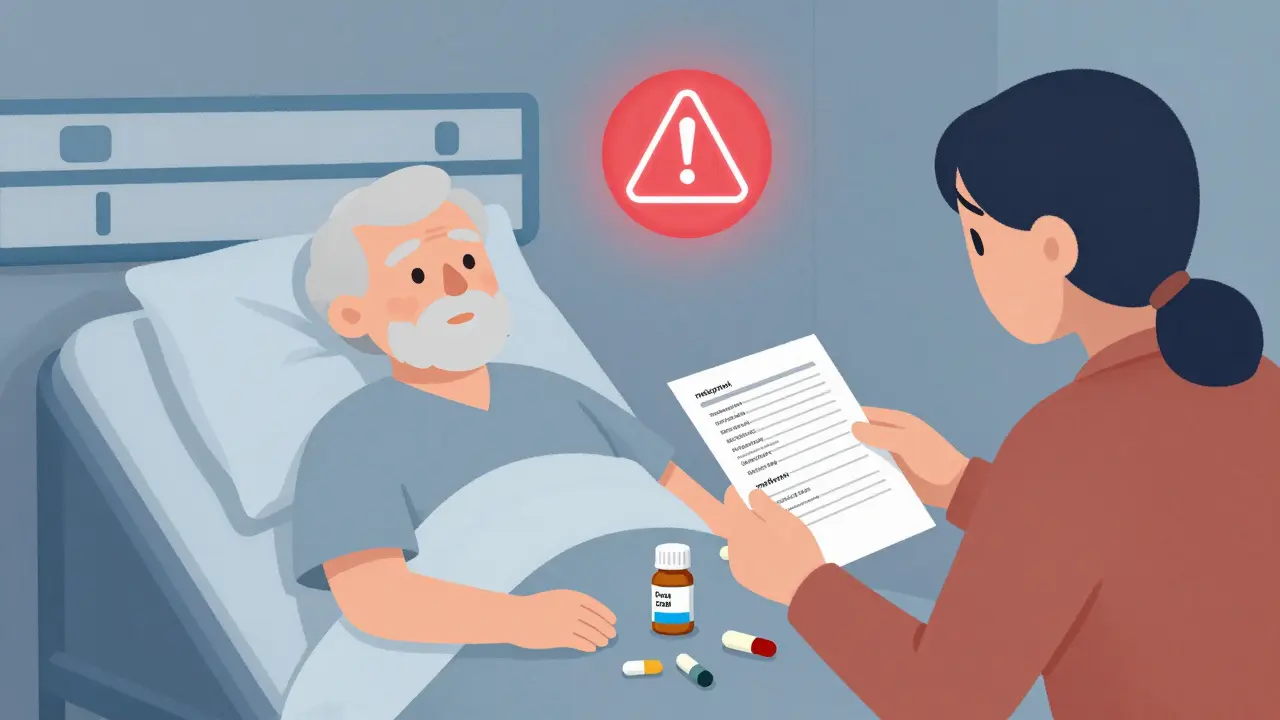
Every year, more than 1.5 million people in the U.S. end up in the emergency room because of something as simple as taking the wrong pill. Not because they were careless, but because the system failed them. This isn’t rare. It’s routine. And it’s costing lives, money, and trust in healthcare. Medication safety isn’t just a hospital policy or a checklist item-it’s a public health emergency that demands urgent attention.
Medication Errors Are Killing More People Than Car Crashes
In the United States, preventable medication errors cause around 125,000 deaths annually. That’s more than traffic accidents. More than HIV/AIDS at its peak. And yet, you rarely hear about it on the news. Why? Because most of these deaths happen quietly-in nursing homes, in outpatient clinics, in the chaos of hospital transitions. A patient gets discharged with five new prescriptions, no clear instructions, and a confusing pill schedule. A nurse misreads a handwritten order. A pharmacist dispenses the right drug but the wrong dose. These aren’t mistakes made by bad people. They’re failures built into the system.
The World Health Organization says 1 in every 10 patients in high-income countries suffers harm from unsafe medication practices. That’s not a glitch. That’s the norm. And the numbers are getting worse. With over 215 billion days of drug therapy used in 2024 alone, and 3,200 new drugs approved since 2000, the complexity has exploded. Older adults-21% of the U.S. population by 2030-are taking an average of six prescriptions. Each one adds risk. One wrong interaction, one missed allergy, one confusing label, and it can be fatal.
The Hidden Cost: $42 Billion a Year
It’s not just lives lost. It’s money wasted. The global cost of medication errors is estimated at $42 billion each year. In the U.S. alone, non-adherence to prescriptions costs $300 billion annually. That’s not just about people forgetting to take their pills. It’s about confusing instructions, unaffordable drugs, lack of follow-up, and poor communication between doctors, pharmacists, and patients.
And here’s the kicker: fixing this saves money. Every dollar spent on medication safety programs returns $7.50 in reduced hospitalizations, fewer ER visits, and lower long-term care costs. Pharmacist-led programs? They return $13.20 for every dollar invested. Yet most hospitals still treat medication safety as an afterthought, not a core investment.
Technology Can Help-But Only If It Works Right
Electronic health records (EHRs) were supposed to fix this. Barcode scanning for meds? Reduces errors by 86%. Clinical decision support? Cuts prescribing mistakes by 55%. AI tools that flag high-risk patients? They’re 73% accurate. These aren’t theories. These are real results from hospitals that actually use them well.
But here’s the problem: most systems are broken. A 2024 study found that 43% of prescription errors intercepted by pharmacists were due to bad EHR design. Buttons too small. Drug names too similar. Alerts that pop up every five seconds until staff just turn them off. Nurses report near-miss errors every month because two drugs look alike on screen-metoprolol and metformin. One lowers blood pressure. The other treats diabetes. Mix them up, and someone could die.
Even the best tech fails without training. Only 63% of U.S. hospitals had fully compliant EHR systems in late 2024. And in rural areas, only 37% offer 24/7 pharmacist support. Meanwhile, big hospitals like Mayo Clinic and Geisinger have cut post-discharge errors by over 50% using AI reconciliation tools and dedicated medication teams. The gap isn’t technology-it’s commitment.

The Fentanyl Crisis Is a Medication Safety Crisis
When you hear about fentanyl overdoses, you think of street drugs. But here’s the truth: nearly 80 million counterfeit pills laced with fentanyl were seized in 2023. These aren’t just sold on the black market. They’re being passed off as legitimate painkillers-oxycodone, Xanax, even Adderall. People take them thinking they’re safe. They’re not. Fentanyl is now the leading cause of death for Americans aged 18 to 45.
This isn’t just a crime issue. It’s a medication safety failure. The supply chain is broken. Regulations are outdated. And patients don’t know what they’re getting. The FDA’s Drug Supply Chain Security Act is supposed to fix this by 2025, requiring electronic tracking of every pill. But only 94% of hospitals use barcode scanning-and only 63% use it well enough to make a difference. If we can’t track pills from factory to patient, how can we protect anyone?
Transitions of Care Are the Deadliest Gap
The most dangerous moment in a patient’s journey is when they move from one provider to another. Discharge from hospital to home. Transfer from ER to rehab. Switching from one doctor to another. That’s when 67% of patients experience at least one medication error.
A patient gets admitted with three meds. They’re given five new ones. They leave with seven. No one checks if they’re still taking the old ones. No one calls to see if they understand the new ones. A 2024 study of 15,000 patient transitions found that most errors happened because no one had the full picture. And the patient? They’re too tired, confused, or scared to ask questions.
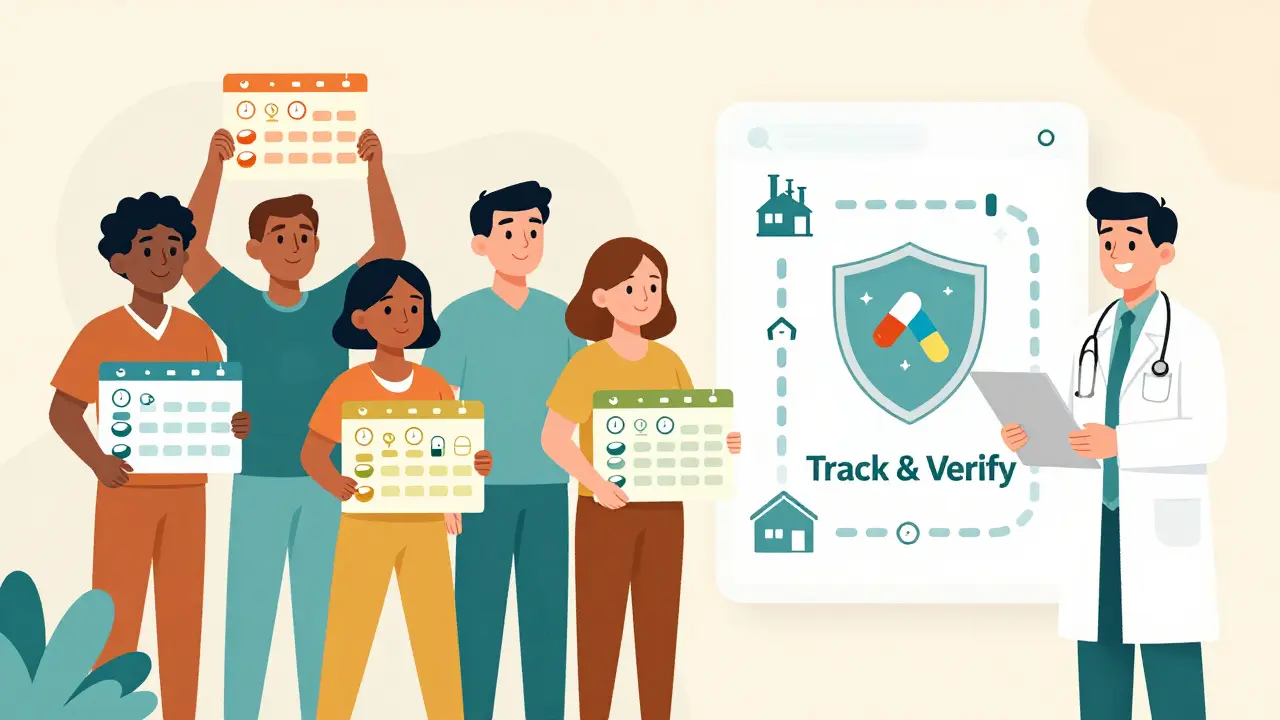
That’s why simple tools like visual medication schedules-color-coded charts with pictures of pills-have reduced errors by 38%. Why standardized order sets cut mistakes by 62%. Why patient portals that let people see their full list of meds and ask questions online increased adherence by 29%. These aren’t fancy tech. They’re basic human-centered fixes.
Why the U.S. Is Falling Behind
Compare the U.S. to the Netherlands. They mandated electronic prescribing across all settings. Result? A 44% drop in medication errors. In the U.K., a national reporting system led to a 30% reduction in serious errors. In India, a nationwide drug safety program tracks reactions through 220 centers.
In the U.S.? Only 38 states require pharmacy technicians to be certified. Only 14% of medication errors are ever reported. We don’t even know the full scope of the problem because we don’t force hospitals to tell us. The CDC tracks emergency visits. The FDA tracks deaths from devices like infusion pumps. But no one tracks the full chain-from prescription to pill to outcome.
And while Medicare now pays extra for high adherence rates on cholesterol and diabetes meds, most independent doctors’ offices don’t have the staff or tools to track it. Only 42% of private practices have full medication safety programs. Meanwhile, big hospital systems spend millions on tech. The system is split in two: well-resourced and under-resourced. And the patients in the second group pay with their health.
What Actually Works
Real change doesn’t come from new laws or fancy software. It comes from simple, consistent actions:
- Pharmacist-led teams who review every patient’s meds at discharge-like at Geisinger Health, where adherence jumped to 89%.
- Visual medication guides with photos and colors so patients know exactly what to take and when.
- Standardized order sets that prevent doctors from accidentally prescribing conflicting drugs.
- AI that flags high-risk patients before they leave the hospital-like the Mayo Clinic’s system that cut errors by 52%.
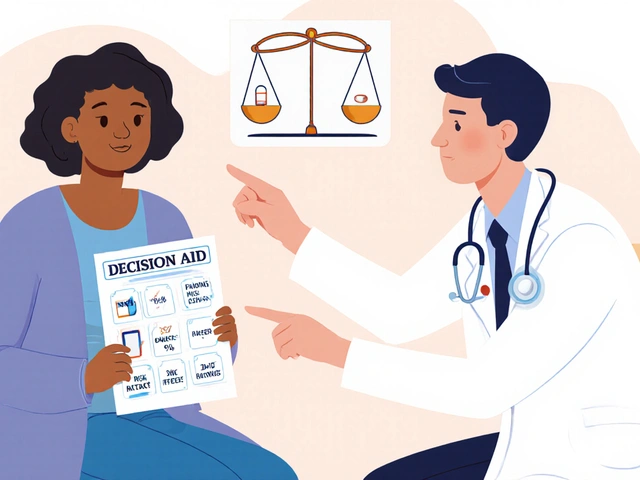
- Open communication where patients are asked: “Do you know why you’re taking this? What happens if you miss a dose?”
And yes-training matters. The WHO says staff need at least 12 hours of medication safety training every year. Yet most hospitals give zero. Or worse, they give a 10-minute video and call it done.
The Bottom Line
Medication safety isn’t about blame. It’s about design. It’s about systems that account for human error-not punish it. It’s about making sure the person who needs a pill gets the right one, at the right time, with the right info.
This isn’t a problem for pharmacists or nurses alone. It’s a public health issue. It affects every family. Every taxpayer. Every person who’s ever taken medicine. And we already know how to fix it. We have the tools. We have the data. We have the proof that saving lives saves money.
What we’re missing is the will. Until we treat medication safety like we treat car safety-mandatory seatbelts, airbags, crash tests-we’ll keep losing people to preventable mistakes. And that’s not just bad healthcare. That’s a moral failure.



It’s staggering how many lives are lost because we treat medication safety like an administrative afterthought instead of a clinical imperative. The data is clear, the solutions are proven, and yet we keep patching holes while the whole system leaks.
I’ve worked in hospital pharmacy for 18 years. I’ve seen the same errors repeat-same misread scripts, same ignored alerts, same patients discharged with no one explaining why they’re taking five new pills. It’s not incompetence. It’s systemic neglect.
And yes, the tech works-if you give staff the time to use it. But when nurses are stretched thin and pharmacists are buried under 200 scripts an hour, no algorithm can compensate for human exhaustion.
We don’t need more reports. We need mandated staffing ratios for pharmacists, real-time reconciliation teams, and a cultural shift: safety isn’t a goal. It’s the baseline.
Compare us to the Netherlands. They didn’t wait for a crisis. They designed for failure. We wait for bodies to pile up before we act. That’s not healthcare. That’s gambling with lives.
Let’s be honest-this isn’t about ‘system failure.’ It’s about lazy patients who don’t read labels, doctors who write like they’re texting, and pharmacies that hire anyone with a pulse and a degree. You blame the system? I blame the people who refuse to take responsibility.
My aunt took her husband’s blood pressure med by accident and ended up in the ER. He had a different prescription. She didn’t check the name. She didn’t call the pharmacist. She just assumed. And now you want to blame EHR design?
Stop infantilizing adults. Teach people to read. Enforce accountability. Stop spending billions on tech that just makes the paperwork prettier while the real problem-human negligence-goes unaddressed.
The ontological crisis in pharmaceutical safety lies not in the pharmacokinetics or the algorithmic architecture, but in the epistemological dissonance between institutional abstraction and embodied lived experience.
When we reduce medication adherence to a behavioral metric, we erase the phenomenological reality of the patient-chronic fatigue, cognitive load from polypharmacy, the existential terror of being a walking pharmacovigilance report.
The EHR is not a tool; it is a hermeneutic apparatus that mediates care through layers of bureaucratic semiotics. The alert fatigue? It’s not user error-it’s the collapse of meaning under the weight of quantified governance.
And the fentanyl crisis? It’s not merely a supply chain failure-it’s the necropolitical consequence of a healthcare system that commodifies relief while pathologizing suffering. We track pills but not pain. We audit doses but not dignity.
Until we recenter care as a relational praxis-not a transactional output-we are merely optimizing the machinery of death.
As someone from Nigeria, I’ve seen how medication safety can be a matter of life or death even without fancy tech. In rural clinics, we use color-coded pill boxes made from recycled plastic because we don’t have EHRs. Community health workers walk door to door to make sure people take their meds.
It’s not high-tech. But it’s human. And it works.
We don’t have $42 billion to waste, but we do have community trust. That’s the real infrastructure. Maybe the U.S. doesn’t need more software-it needs more people who care enough to show up.
Let’s stop comparing systems and start sharing models. We can learn from each other-even if we’re continents apart.
Thank you for writing this with such clarity and depth. The statistics are horrifying, but what’s even more troubling is how normalized they’ve become.
I’m a registered nurse who’s spent 12 years on the front lines. I’ve watched patients get discharged with conflicting meds because the discharge summary wasn’t updated. I’ve watched pharmacists override alerts because they were bombarded with 50 per hour.
Here’s what I’ve learned: the best solutions are simple. Visual pill charts. Phone calls 48 hours after discharge. Pharmacists embedded in primary care teams. These aren’t expensive. They’re just not prioritized.
And yes-training matters. Not a 10-minute video. Actual simulation-based training. With feedback. With accountability.
Change is possible. I’ve seen it. But it requires leadership that sees safety as sacred-not optional.
Bro. Why are we even talking about this? Just make the pills bigger and put emojis on them. 😵💫💊
My grandma took her blood sugar pill and then her heart pill and then her ‘why am I taking this again?’ pill. She’s fine. Mostly.
Stop overcomplicating it. People forget stuff. That’s why we have families. Or Google. Or yelling at your phone.
Also, fentanyl pills? Just don’t take pills from strangers. Duh.
This is such an important conversation-and I’m so glad it’s happening. I come from India, where we don’t have the resources of the U.S., but we’ve learned to be creative. Community pharmacists here often sit with patients for 15 minutes just to explain their meds.
Small things make a difference: pictorial schedules, voice reminders in local languages, follow-up calls from volunteers.
We don’t need AI to fix what humans can fix with care. Let’s invest in people, not just software. The tech can help, but it can’t replace compassion.
Keep pushing for change. We’re all in this together.
I’ve been a pharmacy technician for 15 years. I’ve seen everything. The handwritten scripts that look like hieroglyphs. The EHR that changes the drug name when you click ‘save.’ The patient who doesn’t know if they’re supposed to take their pill before or after coffee.
One thing I’ve learned: the quiet ones-the elderly, the non-English speakers, the mentally overwhelmed-are the ones who get hurt the most.
And we don’t help them because we’re too busy chasing efficiency.
But here’s what works: a 3-minute conversation. ‘Can you show me how you’ll take this?’
It takes time. But it saves lives. And honestly? It’s the only part of my job that ever feels meaningful.
I lost my dad last year because he was given the wrong dose of his heart med after a hospital stay. They didn’t check his old list. They didn’t explain the new one. He was confused, scared, and too tired to ask questions.
It took me months to figure out what happened. I had to pull every record, call every department, beg for answers.
And the worst part? No one apologized. No one even seemed surprised.
I don’t blame the nurses. I blame the system. The system that treats people like numbers. The system that doesn’t train staff to talk to patients. The system that thinks ‘we did our job’ if the pill left the pharmacy.
My dad didn’t die from a disease. He died because no one made sure he understood his meds.
If you’re reading this-please, talk to your loved ones about their prescriptions. Ask them to show you the pills. Write it down. Call the pharmacist. Don’t wait until it’s too late.
Okay but what if this is all a scam? What if the ‘medication errors’ are just a cover for Big Pharma killing people to sell more drugs? I mean, think about it-why are so many drugs being approved? Why do they always add more pills to the mix?
And why is no one talking about how the FDA is basically a revolving door for pharma execs?
I’ve been reading about this for years. They’re not fixing the system-they’re making it worse so they can sell you more ‘solutions.’
They want you to think EHRs will save you. But they’re just tracking you. Every pill you take. Every alert you ignore. They’re building a database.
Don’t trust the system. It’s rigged.
While the data presented is compelling and the systemic failures undeniable, it is worth noting that the prevailing discourse tends to conflate institutional inadequacy with moral deficiency. The assertion that ‘we lack will’ presumes a unified ethical agency among stakeholders who operate under divergent incentives, regulatory constraints, and resource disparities.
One cannot reasonably expect a rural clinic with no internet access to implement AI reconciliation tools, nor can one expect a nurse working three shifts in 48 hours to perform a full med reconciliation while managing 12 other patients.
Therefore, the solution must be structural-not merely aspirational. It must account for economic reality, labor conditions, and geographic inequity. To demand perfection from an under-resourced system is not moral clarity-it is epistemic arrogance.
There is a metaphysical truth here: the pill is a symbol of modernity’s false promise-that we can outsource health to chemistry, and safety to bureaucracy.
We have replaced wisdom with algorithms, presence with prescriptions, and care with compliance.
And now we are astonished that the system collapses under its own weight?
Medication safety is not a technical problem. It is a spiritual one. We have forgotten that healing requires attention, not automation. That trust cannot be encoded. That a human voice saying, ‘I’m here, let me help you,’ is the only antidote to the poison of disconnection.
According to CDC data, only 14% of medication errors are reported. That’s not a systemic failure-it’s a reporting failure. If the data is this incomplete, how can we justify allocating billions to fix a problem we can’t even measure accurately?
Until we establish a mandatory, standardized national reporting framework with validated taxonomy, any intervention is speculative at best and potentially wasteful at worst.
Fix the data infrastructure first. Then we can talk about solutions.
Wait-so you’re telling me the government didn’t make this up to push more EHR contracts? Because I’ve seen the ads. ‘Buy our new AI-powered med safety suite!’
Also, I read on a forum that the FDA approves drugs based on how many times a pharma exec plays golf with the commissioner.
And don’t get me started on how the pill colors are designed to confuse elderly people so they buy more.
It’s all a psyop. I’ve got receipts.