Imagine paying $100,000 a year for a life-saving cancer drug, only to find out there’s a nearly identical version available for a fraction of the cost. That is the promise of biosimilars, which are highly similar, lower-cost alternatives to approved reference biologic products. But unlike generic pills that you can swap at the pharmacy counter with zero hesitation, biosimilars come with a complicated reputation. For years, patients and doctors, the question isn’t just “Is it cheaper?” It’s “Is it safe enough to switch?” The answer lies in how the U.S. Food and Drug Administration (FDA) reviews these complex molecules.
If you have been following healthcare news, you know the landscape shifted dramatically in late 2025. On October 29, 2025, the FDA released landmark draft guidance designed to streamline the approval pathway. This update represents the most significant change since Congress passed the Biologics Price Competition and Innovation Act (BPCIA) in 2010. So, what does this mean for you? Whether you are a patient worried about side effects, a pharmacist navigating substitution rules, or a developer trying to bring a new product to market, understanding the FDA’s review process is critical. Let’s break down exactly how the FDA evaluates biologic alternatives, why the rules are changing, and what you should expect as we move through 2026.
The Core Difference: Why Biosimilars Aren't Generics
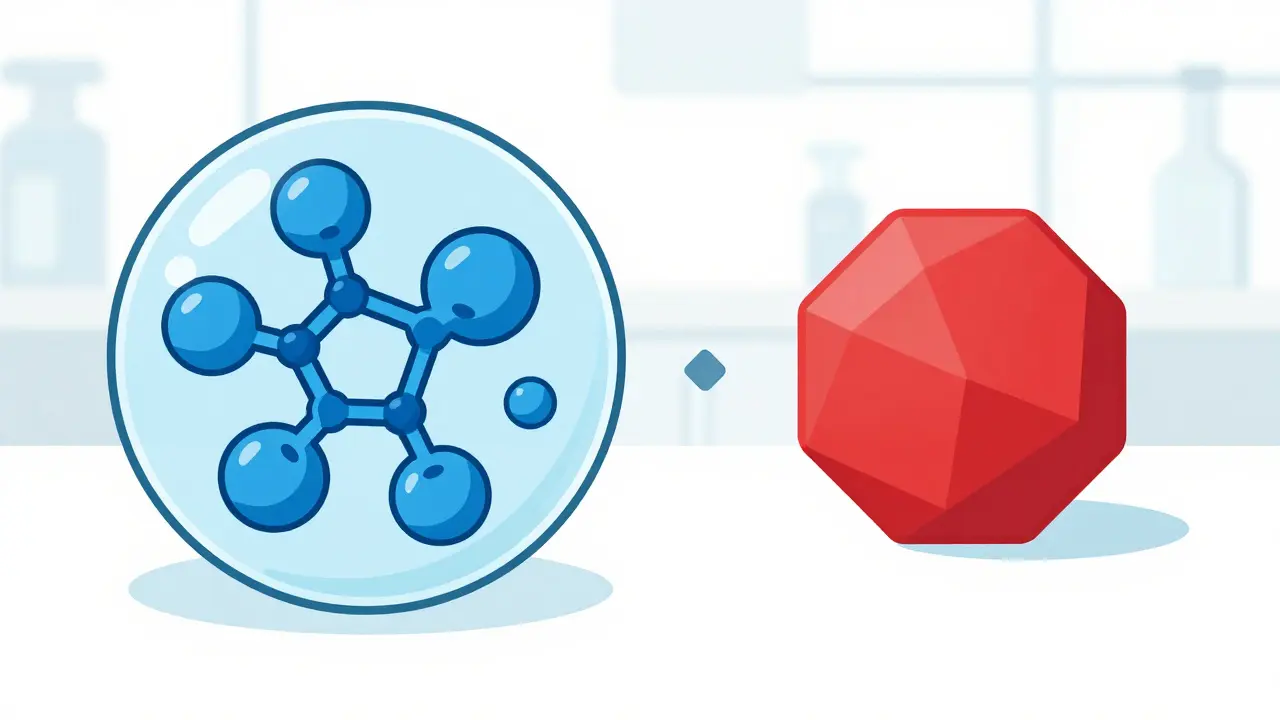
To understand the FDA's review, you first need to grasp why biologics are different from traditional drugs. A generic pill is chemically synthesized. If you make ibuprofen in New York or India, the molecule looks exactly the same. You can replicate it perfectly. Biologics, however, are made inside living cells-like yeast or hamster ovaries. Think of them like wine rather than soda. No two batches of wine are ever 100% identical because the biological process introduces tiny variations.
This complexity means you cannot create an "exact copy" of a biologic drug. Instead, you create a biosimilar, which is a biologic medical product highly similar to an already approved biologic referent product despite minor differences in clinically inactive components. Because they aren't identical clones, the FDA requires rigorous proof that these minor differences do not affect safety or effectiveness. Under Section 351(k) of the Public Health Service Act, applicants must demonstrate "biosimilarity" through a totality of evidence approach. This includes analytical studies, animal tests, and human clinical trials. The goal is to show that there are no clinically meaningful differences between the biosimilar and its reference product regarding safety, purity, and potency.
The Old Way vs. The New Way: The 2025 Shift
Historically, getting a biosimilar approved was a marathon. It took 8 to 10 years and cost between $100 million and $300 million per product. A major bottleneck was the requirement for comparative efficacy studies-large, expensive clinical trials proving the biosimilar worked just as well as the original drug. These studies often took up to three years alone. By late 2025, the FDA had approved 76 biosimilars, but market penetration remained low compared to Europe, where biosimilars capture 67% of the market versus just 23% in the U.S.
That changed with the October 2025 draft guidance titled 'Scientific Considerations in Demonstrating Biosimilarity to a Reference Product.' The FDA realized that modern science has caught up with regulation. Today’s analytical tools are so precise that they can predict clinical outcomes better than some large-scale trials. The new guidance suggests that for many products, sponsors no longer need to routinely conduct comparative clinical efficacy studies. Instead, if three conditions are met, a streamlined path is available:
- The reference product and biosimilar are manufactured from clonal cell lines and are highly purified.
- The relationship between quality attributes and clinical efficacy is well understood.
- A human pharmacokinetic (PK) similarity study is feasible and relevant.
This shift aligns the FDA more closely with the European Medicines Agency (EMA), which has approved over 100 biosimilars since 2006 using a similar logic. For developers, this could cut development timelines to 5-7 years and reduce costs to $50-$150 million. For patients, it means faster access to affordable treatments.
Analytical Characterization: The Heart of the Review
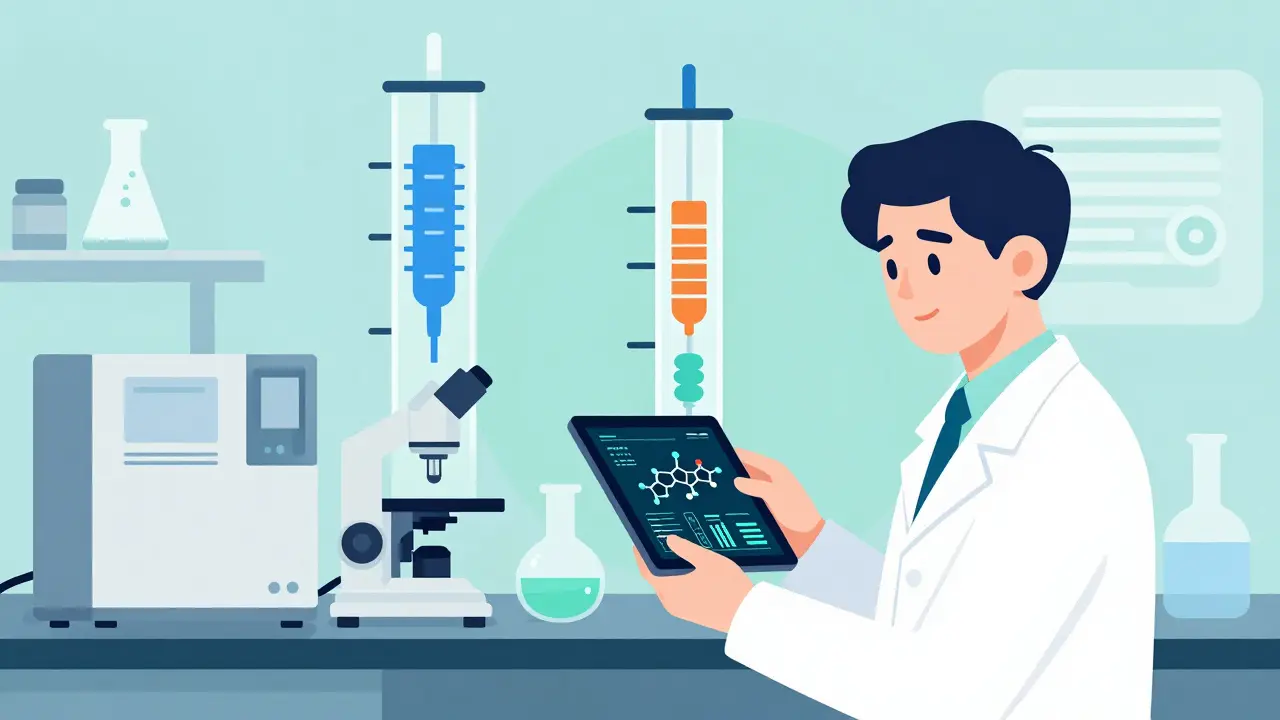
If big clinical trials are becoming less common, what takes their place? Analytical characterization. This is where the real science happens. The FDA requires sponsors to compare hundreds of quality attributes between the biosimilar and the reference product. We are talking about mass spectrometry, chromatography, and bioassays used to examine structure, function, and impurities.
Imagine comparing two skyscrapers. You don’t just look at the height; you check the steel grade, the concrete mix, the wiring, and the glass quality. Similarly, the FDA looks at more than 200 specific attributes. If the analytical data shows high similarity, and the pharmacokinetic data (how the body absorbs and processes the drug) matches, the FDA considers the biosimilar scientifically equivalent. This approach relies on the principle that if the molecule is structurally and functionally identical, it will behave identically in the body. Commissioner Marty Makary emphasized at the GRx+Biosims 2025 conference that this method provides "highly sensitive and specific" data, reducing the burden on patients who would otherwise serve as test subjects in redundant trials.
Interchangeability: The Controversial Designation
Here is where things get tricky. There is a special status called interchangeability, which is an additional designation for a biosimilar that allows a pharmacist to substitute the biosimilar for the reference product without the intervention of the health care provider who prescribed the reference product. Until recently, getting this label required extra studies, specifically "switching studies" that proved alternating between the reference product and the biosimilar didn’t increase risk.
In October 2025, the FDA signaled a massive policy shift. Commissioner Makary stated unequivocally that "Every biosimilar should have the designation of interchangeable," arguing that interchangeability is a legislative term, not a scientific one. He suggested that if a product is proven biosimilar, it should automatically be substitutable. However, the law still requires a separate application for interchangeability. This created tension. While the FDA issued simultaneous interchangeability approvals for denosumab biosimilars Enoby and Xtrenbo in October 2025, critics like Dr. Robert Popovian warned that removing the distinction without legislative change could undermine physician confidence.
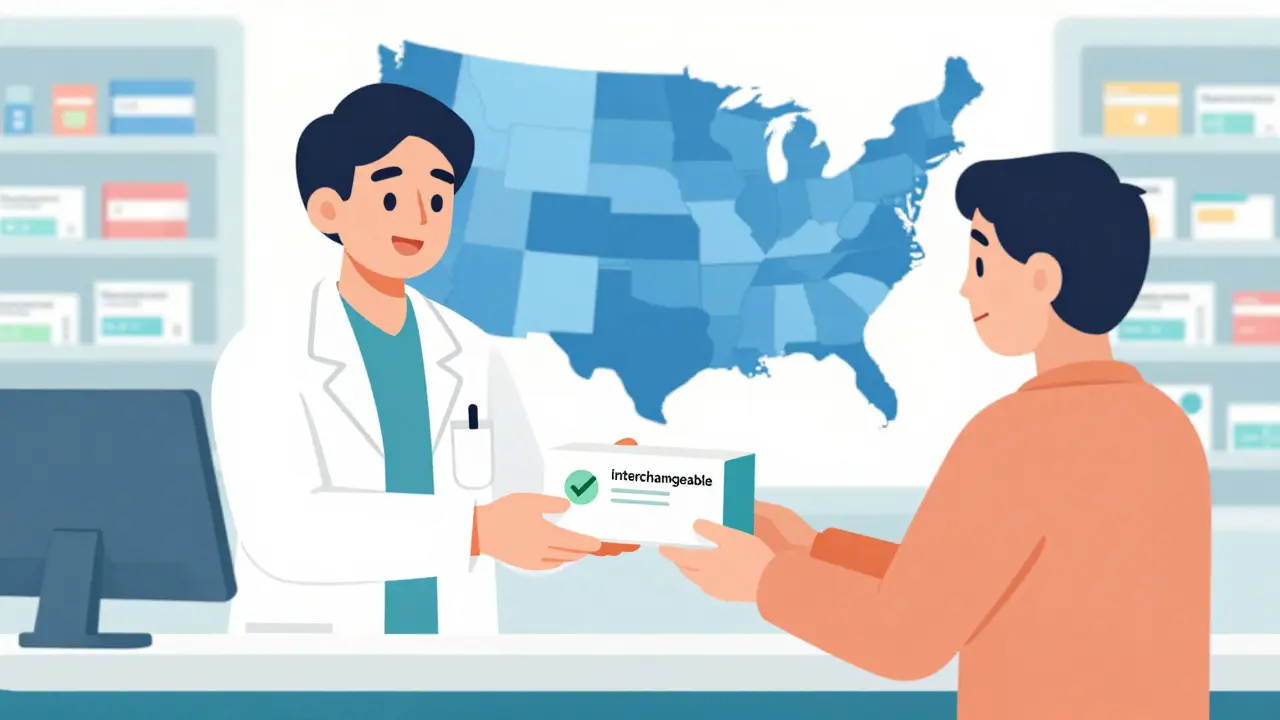
For now, the FDA continues to issue formal designations based on submitted evidence. But the message is clear: the agency wants pharmacies to freely swap biosimilars to drive down costs. Keep in mind that state laws vary. As of late 2025, 34 states still maintain restrictive substitution rules, meaning your ability to get a biosimilar depends partly on where you live.
| Feature | Traditional Approach | Updated 2025 Guidance |
|---|---|---|
| Clinical Efficacy Studies | Routinely required | Not routinely required if analytical/PK data is strong |
| Development Timeline | 8-10 years | Estimated 5-7 years |
| Development Cost | $100M - $300M | $50M - $150M |
| Interchangeability Requirement | Required switching studies | FDA advocates for automatic designation; formal process remains |
| Primary Evidence Focus | Clinical trial outcomes | Analytical characterization & Pharmacokinetics |
What This Means for Patients and Providers
You might be wondering, "Does this mean my doctor can just swap my medication tomorrow?" Not necessarily. Patient experiences reveal mixed feelings. A September 2025 survey by the Arthritis Foundation found that while 78% of patients were satisfied with biosimilar effectiveness, 41% had initial safety concerns. Most of those fears vanished after talking to their doctor, but the anxiety is real. In online communities like Reddit’s r/pharmacy, users report comparable efficacy but note minor differences in injection site reactions.
For healthcare providers, the new guidance simplifies decision-making. Hospital systems like Mayo Clinic have already seen success, reporting a 37% reduction in biologic drug costs after switching oncology treatments to biosimilars, saving roughly $18 million annually. The key takeaway for patients is communication. Ask your doctor why a biosimilar is being recommended. Understand that "biosimilar" does not mean "inferior." It means "highly similar with no clinically meaningful differences."
Challenges and Future Outlook
Despite the progress, hurdles remain. Patent litigation is the biggest roadblock. According to the FTC, 68% of approved biosimilars face patent delays. Companies spend millions fighting lawsuits instead of selling drugs. Additionally, smaller biotech firms struggle with the high barrier to entry for analytical testing. Only 12 of the 76 approved biosimilars came from companies with fewer than 100 employees. The FDA’s Biosimilars Community Resource Center aims to help, offering technical assistance to level the playing field.
Looking ahead to 2026 and beyond, the industry expects annual approvals to jump from 8-10 to 15-20. McKinsey & Company forecasts that biosimilars could capture 40-50% of the market share across major therapeutic areas by 2030. With the final guidance expected by June 2026, we are entering a golden age for biologic competition. The FDA’s commitment to modernizing the pathway through BsUFA III funding ensures that regulatory review will remain efficient. The ultimate goal is clear: save the U.S. healthcare system an estimated $250 billion over the next decade while keeping patients healthy.
What is the difference between a generic drug and a biosimilar?
Generic drugs are exact chemical copies of small-molecule drugs, allowing for easy substitution. Biosimilars are highly similar versions of complex biologic drugs made from living cells. Because biologics cannot be perfectly replicated, biosimilars undergo rigorous testing to prove there are no clinically meaningful differences in safety, purity, and potency compared to the reference product.
How long does it take the FDA to approve a biosimilar?
Traditionally, the development and approval process took 8 to 10 years. However, with the updated 2025 guidance streamlining clinical requirements, the timeline is expected to decrease to approximately 5 to 7 years. The actual FDA review period for a Biologics License Application (BLA) typically follows strict user fee agreements, aiming for decisions within 10 months of filing.
Can a pharmacist substitute a biosimilar for my prescribed biologic?
Only if the biosimilar has been designated as "interchangeable" by the FDA AND your state laws allow automatic substitution. As of late 2025, the FDA is pushing for all biosimilars to be considered interchangeable, but statutory requirements and varying state regulations mean substitution is not yet universal. Always check with your pharmacist and prescriber.
Are biosimilars as safe and effective as the original biologic?
Yes. The FDA requires extensive analytical, animal, and human clinical data to demonstrate that biosimilars are highly similar to the reference product with no clinically meaningful differences. Real-world data, including surveys from organizations like the Arthritis Foundation, shows high patient satisfaction and comparable efficacy rates.
When will the new FDA biosimilar guidance become final?
The draft guidance was released in October 2025 and was open for public comment until January 27, 2026. The FDA expects to release the final guidance by June 2026. This final document will codify the streamlined approval pathways and clarify expectations for sponsors regarding clinical efficacy studies.