Imagine waiting over two years for a cheaper version of a life-saving medication, even though the science is ready and the factory is built. For millions of patients, this isn't a hypothetical scenario-it's the reality created by the 30-month stay. This regulatory pause button doesn't exist because the FDA needs more time to test safety; it exists because a brand-name company has sued a generic manufacturer over patents. Understanding how this mechanism works is crucial for anyone navigating the complex landscape of pharmaceutical pricing and access.
The Origin of the 30-Month Stay
To understand why generic drugs face these delays, we have to look back at 1984. That year, Senators Orrin Hatch and Henry Waxman passed the Drug Price Competition and Patent Term Restoration Act, commonly known as the Hatch-Waxman Act. The goal was to strike a delicate balance: protect the billions of dollars innovator companies invest in research and development while ensuring that affordable generic drugs could enter the market once patents expired.
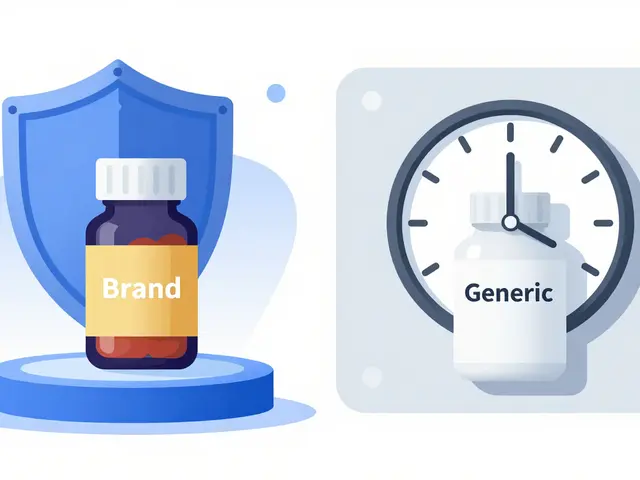
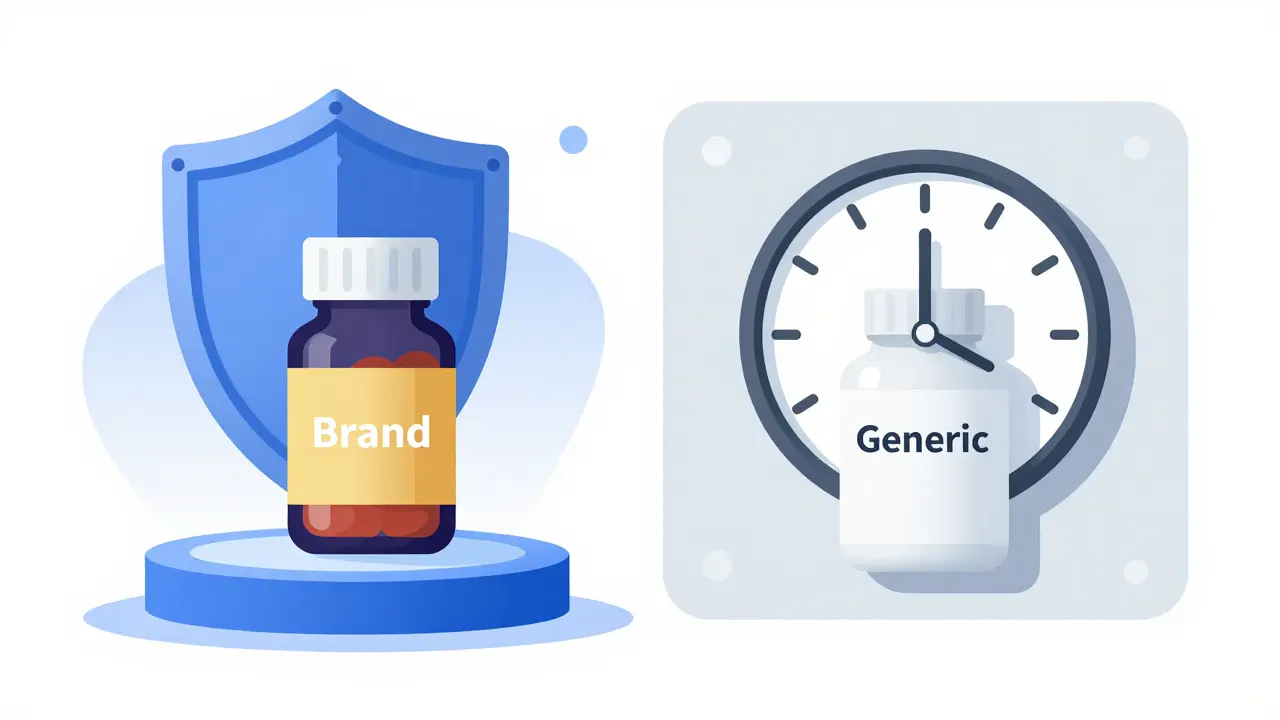
The 30-month stay was designed as a temporary shield. It allows brand-name manufacturers a predictable window to resolve legal disputes without immediately losing their market exclusivity. However, critics argue that what started as a protective measure has evolved into a strategic tool used to delay competition far beyond the original intent. Today, this mechanism remains active and unchanged since its inception, continuing to shape the timeline for when lower-cost alternatives become available to consumers.
How the Mechanism Triggers a Delay
The process begins when a generic manufacturer files an Abbreviated New Drug Application (ANDA) with the U.S. Food and Drug Administration (FDA). If the generic company believes the brand-name drug's patents are invalid or unenforceable, they file a Paragraph IV certification. This is essentially a legal challenge stating, "We think your patent shouldn't stop us from selling our version."
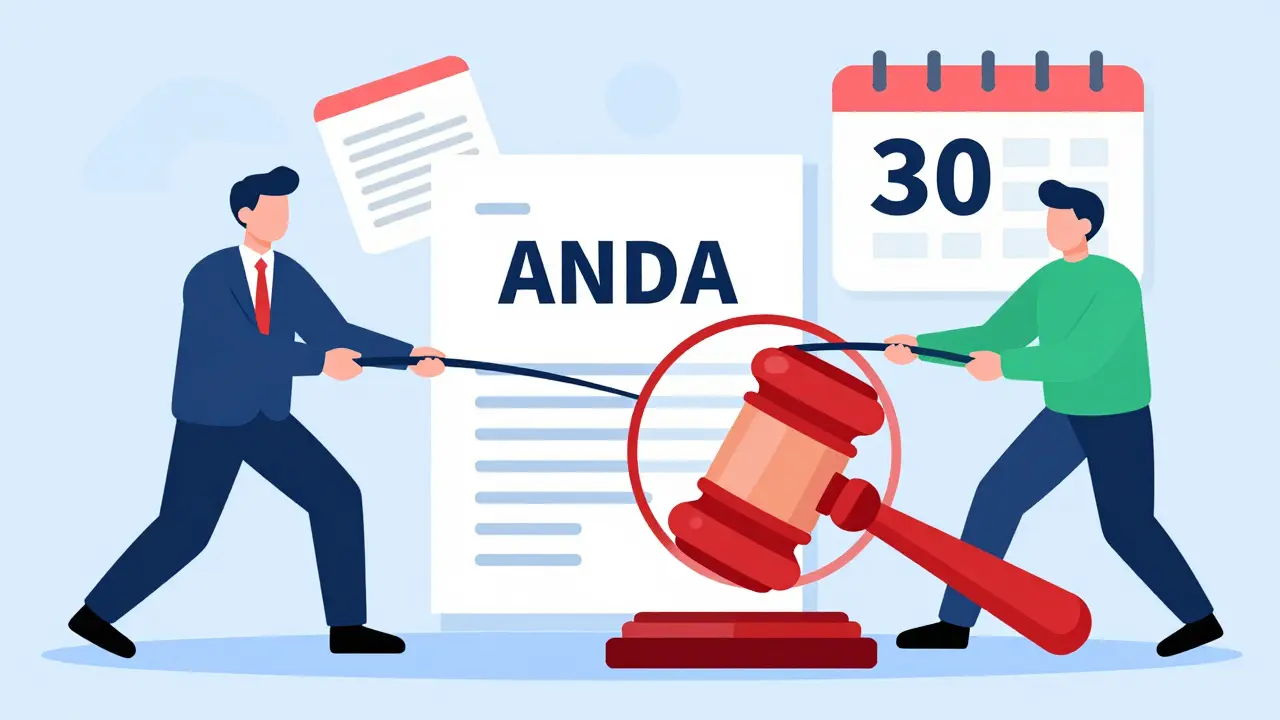
Upon filing this certification, the generic manufacturer must notify the brand-name company and all relevant patent holders listed in the FDA's Orange Book. Here is where the clock starts ticking. If the brand-name manufacturer files a patent infringement lawsuit within 45 days of receiving that notice, the FDA is automatically prohibited from approving the generic application for up to 30 months. This period is known as the 30-month stay. It is important to note that this stay does not stop the FDA from reviewing the scientific data. In fact, the agency can grant tentative approval during this time, meaning the drug is scientifically ready but legally blocked from hitting shelves until the litigation resolves or the stay expires.
| Event | Timeframe / Duration | Impact on Market Entry |
|---|---|---|
| Filing of ANDA with Paragraph IV | Median 5.2 years after brand approval | Initiates legal challenge |
| Brand Lawsuit Window | 45 days after notice | Triggers the 30-month stay if filed |
| 30-Month Stay Period | Up to 30 months | Blocks final FDA approval |
| Tentative Approval | During litigation | Allows immediate launch post-stay |
| Generic Launch Gap | Median 3.2 years after stay ends | Often due to commercial readiness |
The Hidden Complexity: NCE Exclusivity and MMA Limits
The 30-month stay is not always just 30 months. For drugs classified as New Chemical Entities (NCEs), which receive five years of regulatory exclusivity, the effective delay can stretch to approximately 40 months. This happens because the exclusivity period and the litigation stay overlap, creating a longer barrier to entry. Recognizing this potential for extended delays, Congress passed the Medicare Prescription Drug, Improvement, and Modernization Act (MMA) in 2003. A critical provision of the MMA limits brand companies to only one 30-month stay per generic applicant. This prevents brands from filing multiple lawsuits on different patents to sequentially extend the blockade indefinitely.
Despite this limit, brand companies still employ strategies like "patent evergreening," where they obtain secondary patents on minor modifications-such as a new dosage form or delivery method-to list additional patents in the Orange Book. A 2019 study by the Brookings Institution found that 67% of patents listed for top-selling drugs were obtained after the initial approval, suggesting that the system is often exploited to maintain monopoly power rather than protect genuine innovation.
Divergent Expert Opinions on Impact
Is the 30-month stay a necessary safeguard or an artificial barrier? Experts remain deeply divided. Dr. Aaron Kesselheim from Harvard Medical School argues that the stay adds a median of 1.8 years to market exclusivity for blockbuster drugs, serving primarily as a tool for brand manufacturers to delay competition. On the other hand, former FDA Commissioner Scott Gottlieb defended the system, noting that it has facilitated the approval of over 12,000 generic drugs since 1984, saving consumers roughly $2.2 trillion.
Recent data complicates this debate further. A 2021 study published in Clinical and Translational Science by researchers at the University of Southern California concluded that 30-month stays rarely delay generic entry directly. They found a median gap of 3.2 years between the expiration of the stay and the actual generic launch. This suggests that factors other than the legal stay-such as manufacturing capacity, supply chain issues, or commercial strategy-often play a larger role in timing. Conversely, FTC Chair Lina Khan’s 2022 report criticized the mechanism for creating unnecessary barriers, estimating it delays entry by an average of 26 months for drugs facing Paragraph IV challenges.

Economic Consequences and Industry Behavior
The financial stakes are enormous. The U.S. generic drug market was valued at $127.4 billion in 2022, representing 90% of prescriptions but only 23% of total spending. When generics enter the market, prices typically drop by 80-85% within the first year. However, the FTC reported in 2021 that patent litigation delays associated with the 30-month stay add approximately $13.9 billion annually to U.S. prescription drug costs.
This economic pressure drives intense competition among generic manufacturers. The "first applicant" provision grants 180 days of marketing exclusivity to the first successful Paragraph IV filer. This creates a race to be the pioneer challenger. According to FDA data from 2022, drugs with multiple Paragraph IV filers reach generic approval 8.2 months faster than those with single filers. Generic companies spend between $3-5 million per ANDA on patent litigation alone, according to a 2022 survey by the Association for Accessible Medicines. These costs are ultimately baked into the price of the drug, affecting both manufacturers and patients.
Future Reforms and Legislative Pressure
As drug prices continue to rise, political pressure to reform the Hatch-Waxman framework is mounting. The Affordable Prescriptions for Patients Act of 2023 proposes shortening the 30-month stay to 18 months and preventing stays for secondary patents. The FDA’s 2023 draft guidance also aims to enhance patent transparency, requiring more detailed information in Orange Book listings to reduce frivolous claims that trigger unnecessary stays.
Industry projections suggest significant shifts ahead. Evaluate Pharma predicts that potential reforms could accelerate generic entry for $78 billion worth of branded drugs losing patent protection through 2028. Meanwhile, biosimilars, which operate under a different 12-year exclusivity period without a direct 30-month stay equivalent, are expected to grow from 3% to 12% of the biologics market by 2028. As the pharmaceutical landscape evolves, the traditional Hatch-Waxman model faces increasing scrutiny, with 67% of industry executives expecting significant reforms within five years.
What exactly is the 30-month stay?
The 30-month stay is a regulatory pause that prevents the FDA from approving a generic drug application for up to 30 months. It is triggered when a brand-name manufacturer files a patent infringement lawsuit against a generic company within 45 days of receiving a Paragraph IV certification challenging the brand's patents.
Why do generic companies file Paragraph IV certifications?
Generic companies file Paragraph IV certifications to assert that the patents listed in the FDA's Orange Book for a brand-name drug are invalid, unenforceable, or will not be infringed by their generic product. This allows them to seek approval before the patent actually expires, potentially gaining early market access and 180 days of exclusivity.
Can the FDA approve a generic drug during the 30-month stay?
The FDA cannot grant *final* approval during the stay, but it can grant *tentative approval*. This means the FDA has determined the drug meets all scientific requirements for safety and efficacy. Once the 30-month stay expires or the litigation is resolved in favor of the generic company, final approval can be issued almost immediately.
How does the MMA of 2003 affect the 30-month stay?
The Medicare Prescription Drug, Improvement, and Modernization Act (MMA) of 2003 limited brand-name manufacturers to triggering only one 30-month stay per generic applicant. This prevents companies from filing multiple lawsuits on different patents to sequentially extend the delay indefinitely.
Do 30-month stays significantly delay generic drug availability?
Opinions vary. Some studies show that generic launches often occur years after the stay expires, suggesting commercial factors are more impactful. However, the FTC and other critics argue that the stay creates artificial barriers that delay entry by an average of 26 months for challenged drugs, costing consumers billions annually.