When you pick up a prescription at the pharmacy, you might be told, "Keep this in the fridge." It sounds simple. But if you don’t know exactly how to do it, you could be risking your health without even realizing it. Medications that need refrigeration aren’t just special-they’re fragile. A few degrees too warm, or worse, a quick freeze, and they can lose their power. For people managing diabetes, autoimmune diseases, or chronic conditions, this isn’t a minor inconvenience. It’s a matter of life and death.
Why Some Medications Need the Fridge
Not all pills or liquids need cold storage. Most tablets, antibiotics, or blood pressure meds are fine at room temperature. But biologics-medications made from living cells-are another story. These include insulin, certain vaccines, injectable biologics like Humira or Remicade, and some antibiotics. These drugs are made of proteins or complex molecules that break down easily. Heat, light, or freezing can change their structure. Once that happens, they stop working properly. The standard temperature range for refrigerated medications is 2°C to 8°C (36°F to 46°F). This isn’t arbitrary. It’s the sweet spot where the medicine stays stable but doesn’t freeze. If it gets colder than 0°C (32°F), proteins can unfold permanently. If it gets warmer than 8°C, degradation speeds up. Studies show some biologics lose half their potency in just 24 hours at 25°C (77°F). That’s not theory-it’s documented in real cases where patients ended up in the hospital because their insulin didn’t work.What Medications Need Refrigeration?
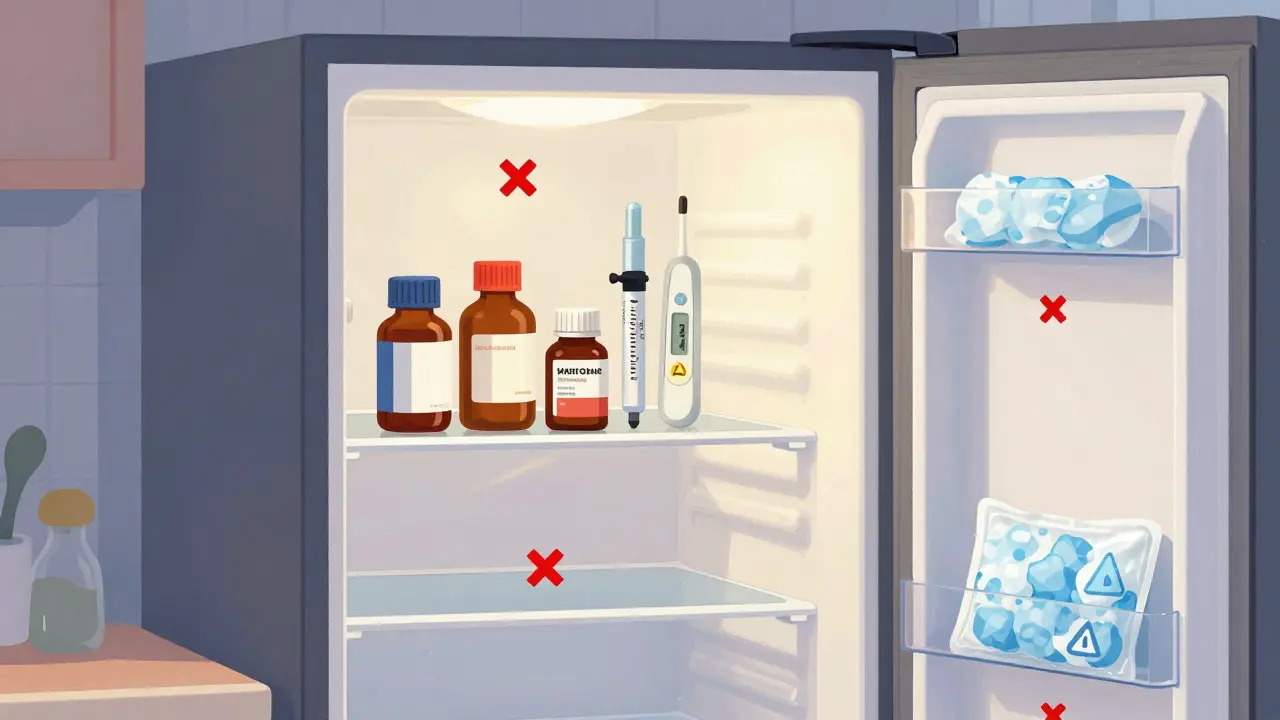
Here’s a clear list of common medications that require refrigeration before and/or after opening:- Insulin: Unopened vials or pens must be refrigerated. Once opened, most can last 28-30 days at room temperature (up to 30°C). But never store them in the door shelf.
- Vaccines: MMR, flu shots, shingles vaccine, and COVID-19 boosters require strict 2°C-8°C storage. Even a few hours outside this range can ruin them.
- Biologics: Drugs like Enbrel, Orencia, and Stelara must stay cold. Some, like Remicade, can be kept at room temperature for up to 6 months-but only if unopened and within expiration.
- Some antibiotics: Certain liquid antibiotics, like Augmentin suspension, need refrigeration after mixing.
- Eye drops: Some, like latanoprost (Xalatan), must be refrigerated until opened, then can be kept at room temperature for 6 weeks.
Always check the label. Some generic versions have different rules than brand names. If the instructions say "refrigerate," don’t assume it’s optional.
Where NOT to Store Them in Your Fridge
Your kitchen fridge isn’t designed for medicine. It’s built for food. And food storage is messy. The back of the fridge is usually the coldest-around 3.4°C. The door shelves? They can swing from 11°C to 15°C depending on how often you open the door. That’s way too warm for most medications.Here’s what happens if you store meds in the wrong spot:
- Door shelves: Temperature swings of 5-7°C daily. Bad for insulin, vaccines.
- Freezer compartment: Even brief contact with freezing air can destroy biologics. Once frozen, insulin is permanently damaged.
- Back wall near vents: Too cold. Risk of accidental freezing.
- Top shelf: Often warmer than middle shelves.
The safest spot? The middle shelf. Away from the door. Away from the freezer. That’s where temperature stays most stable-around 4°C in most home fridges.
What Happens When Medications Get Too Warm or Too Cold?
It’s not just about "losing effectiveness." It’s about danger.Take insulin. If it’s been sitting in a hot car at 35°C for 48 hours, it may still look normal. But it’s lost 30-40% of its strength. The person using it won’t feel any different. Their blood sugar will spike-slowly, silently. Then they get sick. Diabetic ketoacidosis. Emergency room. Hospital stay. All because the insulin didn’t work.
Or vaccines. If a flu shot was stored at 12°C for a week, it might still be injected. But it won’t trigger the right immune response. The person thinks they’re protected. They get the flu. That’s not rare. The CDC estimates 15-25% of home-stored vaccines experience temperature excursions.
Freezing is even worse. Once a biologic freezes-even for 10 minutes-the proteins clump together. Thawing doesn’t fix it. It’s ruined. No amount of shaking, warming, or waiting will bring it back. And you won’t know until it’s too late.
How to Store Them Right at Home
You don’t need a fancy lab fridge. But you do need a smart system.- Use the middle shelf. That’s your sweet spot. Not the door. Not the back. Not the freezer.
- Get a digital thermometer. A basic one costs $25. Put it next to your meds. Check it weekly. If it’s above 8°C or below 2°C, move them.
- Don’t overfill the fridge. Air needs to circulate. Crowded fridges create hot spots.
- Keep meds in original packaging. Light and moisture degrade drugs. The box protects them.
- Label the shelf. Use a sticky note: "MEDS ONLY - DO NOT MOVE." This prevents well-meaning family members from rearranging.
If you’re on multiple refrigerated drugs, consider a dedicated small fridge. You can find reliable ones for under $200. They’re quiet, energy-efficient, and keep a steady temperature. No more guessing.
Traveling with Refrigerated Medications
Traveling? This is where most people mess up.Here’s what works:
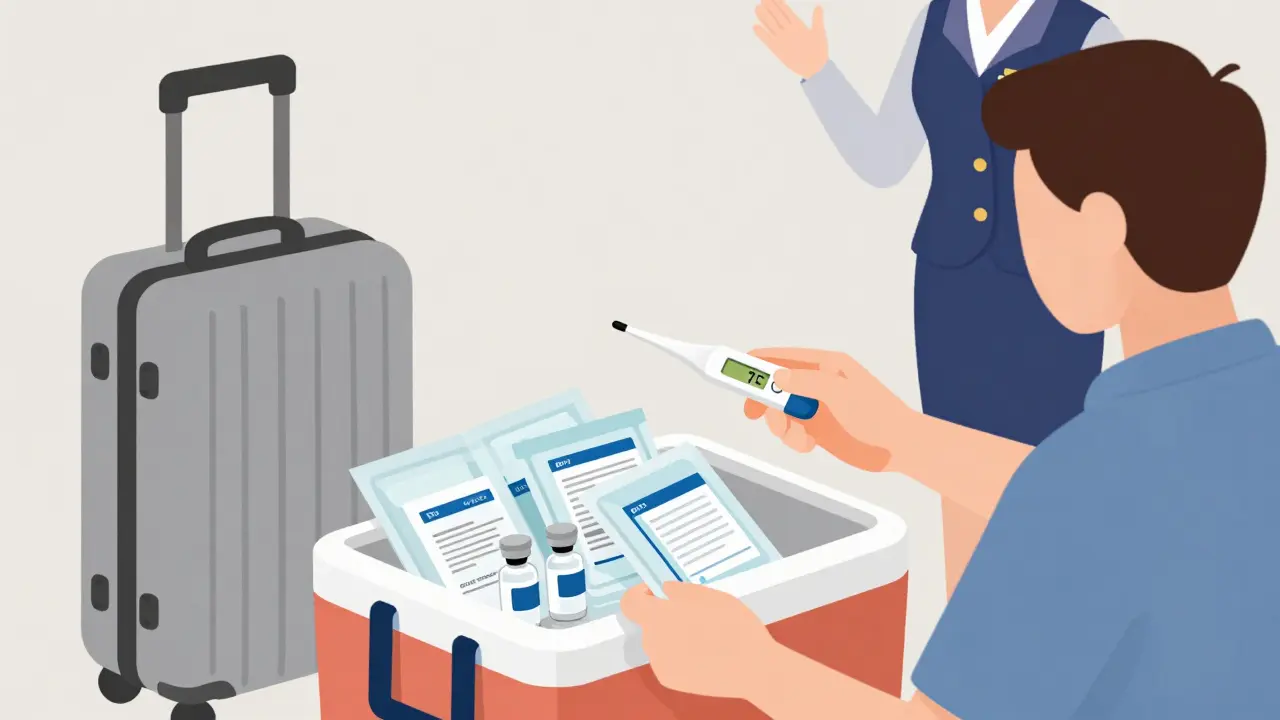
- Insulated cooler with ice packs. Use phase-change gel packs (not regular ice). They stay at 2-8°C longer.
- Never check it as luggage. Airplane cargo holds can drop below freezing or hit 40°C.
- Carry it on. Keep it in your personal bag. Tell security: "These are life-saving medications." They’re trained to handle this.
- Use a travel thermometer. Small ones fit in your pocket. Check the temp before using.
- Plan ahead. If you’re flying, call the airline. Some offer refrigerated storage at check-in.
One patient in Durban told me she flew to Johannesburg for a specialist appointment. She packed her biologics in a small cooler with two gel packs. The flight was delayed. Three hours later, the thermometer read 7°C. Safe. She didn’t panic. She had a plan.
Power Outages and Emergencies
Power cuts happen. Especially in places like Durban where storms or grid issues cause outages.What to do:
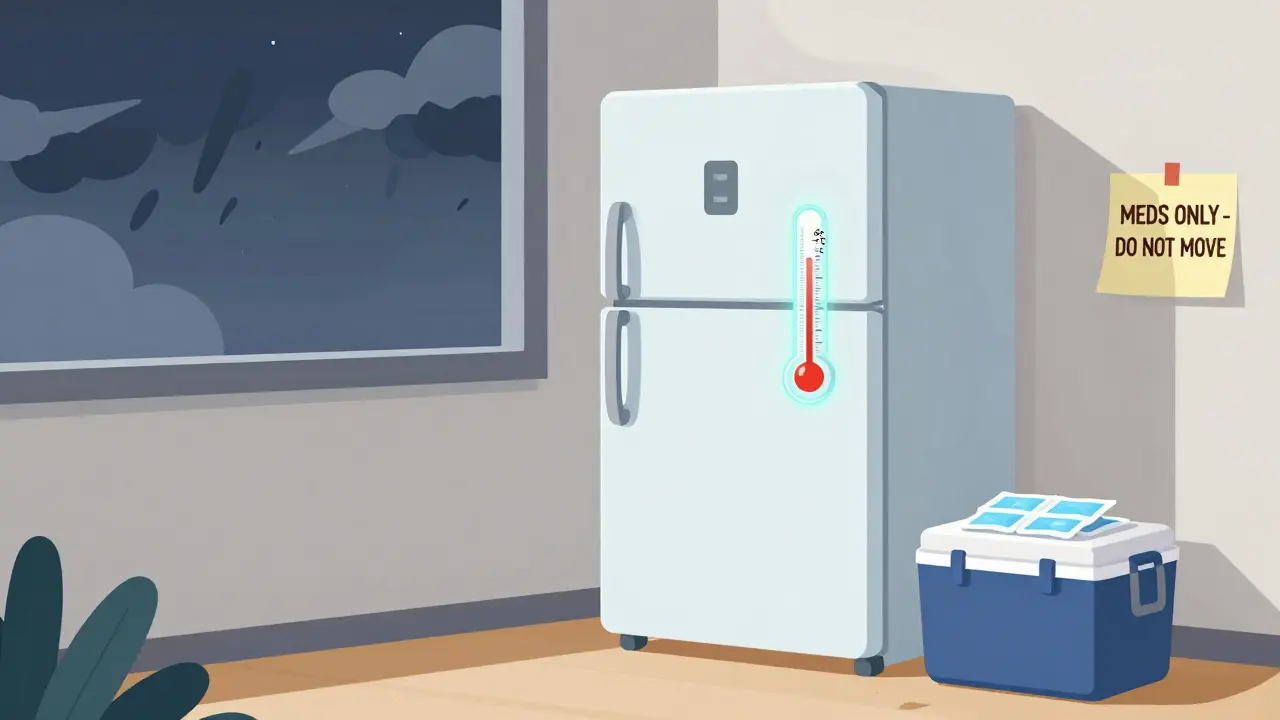
- Keep the fridge closed. A full fridge stays cold for 24-48 hours. Don’t open it.
- Use a backup cooler. Keep a small insulated box with gel packs ready. Move meds there if the outage lasts more than 4 hours.
- Know your meds’ limits. Insulin can last 28 days at room temp after opening. If the outage is short, you’re fine. If it’s long? Call your pharmacist. They’ll tell you if it’s still safe.
- Never assume. If you’re unsure, don’t use it. Get a replacement.
What Experts Say
Pharmacists and doctors don’t just say "keep it cold" because they’re strict. They’ve seen the results.A 2023 survey of 1,247 insulin users found 68% had experienced a medication failure they suspected was due to temperature. Common signs? Unexplained high blood sugar, cloudy insulin, or needles that clogged. One woman in Texas had to be hospitalized after her insulin went bad in a hot car. She didn’t know it had been exposed.
On the flip side, people who started using a dedicated medication fridge saw better control. One Reddit user wrote: "After switching to a small fridge just for my meds, my HbA1c dropped from 8.2% to 6.9%. I finally feel in control."
What’s Changing Now?
The rules are slowly updating. Newer insulins, like those from Novo Nordisk, can now stay stable at 37°C for up to 7 days. That’s a big deal. But manufacturers still label conservatively-because they’re liable if you get hurt.Smart fridges are coming too. Samsung’s 2023 model has a "medication mode" that locks the temp at 4°C. It’s not common yet, but it’s a sign of where things are headed.
By 2030, experts predict 30% of all prescriptions will need refrigeration. That means more people will need to learn this. It’s not going away.
Final Advice
If you’re taking a refrigerated medication:- Know the exact temp range.
- Store it on the middle shelf.
- Check the temperature weekly.
- When in doubt, throw it out and get a new one.
- Ask your pharmacist for written instructions. Don’t rely on memory.
Your medication isn’t just a pill. It’s a tool. And tools fail when they’re not cared for. Treat your fridge like a pharmacy shelf. Because for you, it is.
Can I store insulin in the freezer to make it last longer?
No. Freezing insulin destroys its structure. Even if it thaws and looks normal, it won’t work. Once frozen, it’s ruined. Always keep insulin between 2°C and 8°C until opened, then store at room temperature as directed.
How do I know if my insulin has gone bad?
Look for changes: cloudiness, clumping, frosting, or crystals. If it looks unusual, don’t use it. Also, if your blood sugar suddenly spikes without reason, your insulin may have lost potency. Always check expiration dates and storage conditions.
Do all vaccines need refrigeration?
Yes, most vaccines require strict 2°C to 8°C storage. Even a few hours outside this range can reduce effectiveness. Always store them in the middle of the fridge, never in the door. If you’re unsure, call your pharmacy or clinic before using.
Can I use a regular cooler for travel?
Yes, but only if you use phase-change gel packs, not regular ice. Regular ice melts and creates water, which can damage vials. Gel packs stay cold longer and maintain the right temperature. Always carry a thermometer with you to check.
What should I do during a power outage?
Keep the fridge closed. A full fridge stays cold for up to 48 hours. If the outage lasts more than 4 hours, move your meds to a cooler with gel packs. If you’re unsure whether your medication is still safe, contact your pharmacist. Never use medicine you suspect has been compromised.





I can't believe how many people just toss their insulin in the fridge door like it's a soda. I had a cousin who lost a foot because she didn't know the difference. Seriously. Get a $25 thermometer. Put it next to your meds. Check it once a week. It's not rocket science. 🤦♂️
Honestly? I use a mini-fridge just for my meds. Got it off Facebook Marketplace for $80. Quiet, keeps a steady 4°C, and I don't have to worry about my roommate moving stuff around. Best decision I ever made. My A1C dropped like a rock.
So let me get this straight... we're telling people to buy a whole new fridge just because the one in their kitchen isn't calibrated for pharmaceuticals? I mean, sure, it's ideal... but also kinda ridiculous. Most people don't have $200 to throw at a 'med fridge'. Maybe we should be pushing for better packaging instead of making patients into lab technicians.
If your insulin looks cloudy or has little white flakes? Toss it. No exceptions. I've seen too many people try to 'save' it. It doesn't work. Your body will tell you something's wrong before you even check the meter. Don't gamble with it.
Middle shelf. Always. Door = bad. Freezer = worse. Thermometer = essential. That's it.
I used to think this was overkill til my dad had a bad reaction. Turns out his insulin got warm in the car during a road trip. He didn't even know. Scary stuff. Now I carry a little cooler with gel packs everywhere. Even to the grocery store. Better safe than sorry. And yeah, I know I sound like a nerd. Worth it.
I don't trust any of this. The pharmaceutical companies know people will mess up storage so they make the drugs fragile on purpose. It's a profit scheme. They want you buying new ones every month. And don't even get me started on the CDC. They're not your friends. They're tracking you.
If you're too lazy to store your meds right then you deserve to get sick. I'm diabetic too but I don't whine about it. You got a fridge? Then use it right. No excuses. Stop being a baby and take responsibility for your own health. Period
Man I used to store my biologics next to the milk like a chump. Then one day my leg started tingling and I nearly keeled over. Turned out the fridge had been running hot for days. I almost died because I was too damn lazy to check a thermometer. Now I got a whole damn mini-fridge in my closet. My wife thinks I'm nuts. I don't care. I'm still here. That's all that matters.
This article assumes all users have access to a functioning refrigerator. In many parts of India, power outages last 6–8 hours daily. The concept of 'middle shelf stability' is a luxury of the Global North. Why are we not discussing decentralized cold-chain solutions for low-resource settings? This is not a guide - it is a privilege.
^^^ This. I live in Canada. We got power. We got fridges. But what about the guy in Mumbai who's got a 12-hour outage every Tuesday? You think he's got a $200 mini-fridge? Nah. He's using a clay pot with wet cloth. That's real. And it works better than you'd think. Don't lecture people who are surviving.