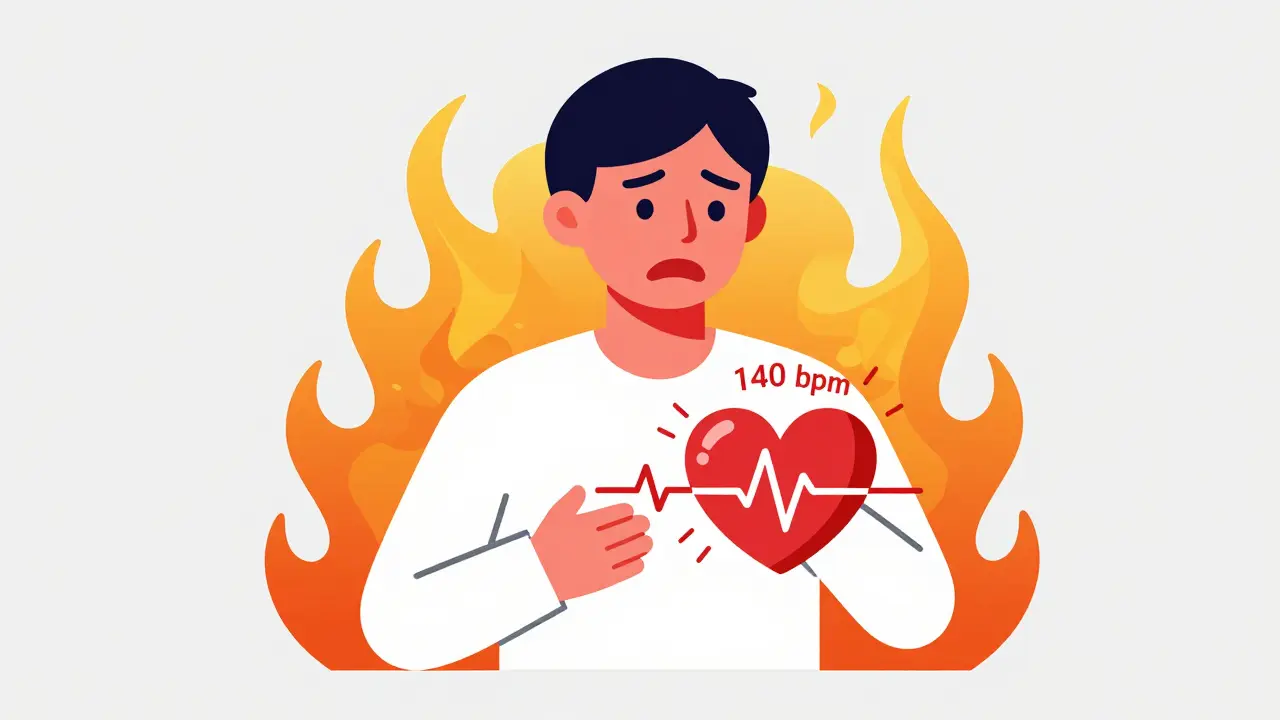
You know that feeling when your heart races after a double espresso? Now imagine that sensation amplified tenfold, combined with a fever that won't break, confusion that clouds your thoughts, and a body that feels like it's burning from the inside out. This isn't just severe anxiety or a bad flu. This is thyroid storm, a medical catastrophe that strikes without warning and demands immediate, aggressive intervention.
Thyroid storm, also known as thyrotoxic crisis, is a rare but life-threatening complication of hyperthyroidism characterized by extreme overproduction of thyroid hormones (triiodothyronine [T3] and thyroxine [T4]) that results in multi-system organ failure. It represents the most severe manifestation of thyrotoxicosis. If you or someone you love has an overactive thyroid, understanding this condition isn't just academic-it could save a life.
The Silent Trigger: How Hyperthyroidism Turns Deadly
To understand thyroid storm, you first have to understand the engine driving it: hyperthyroidism is a condition where the thyroid gland produces excessive thyroid hormones that accelerate cellular metabolism throughout the body. In most cases, this leads to weight loss, tremors, and irritability. But in thyroid storm, the system doesn't just speed up; it crashes.
This condition develops in individuals with untreated or poorly managed hyperthyroidism, including Graves' disease is an autoimmune disorder that causes the thyroid gland to become overactive. According to data from the Mayo Clinic, while hyperthyroidism affects approximately 1.2% of the U.S. population, thyroid storm remains exceedingly rare, occurring in only 0.2 cases per 100,000 people annually. However, for those who get it, the stakes are absolute. Untreated cases have a mortality rate approaching 100%. With appropriate treatment, survival rates improve to 20-30%, but the window for action is narrow.
Recognizing the Red Flags: Symptoms That Demand Action
Thyroid storm presents with specific, measurable physiological abnormalities across multiple organ systems. The diagnostic criteria established by the Japan Thyroid Association require thyrotoxicosis plus significant symptoms. Here is what you need to look for:
- Extreme Fever: Temperatures soaring between 104°F to 106°F (40°C to 41.1°C) accompanied by heavy sweating (diaphoresis).
- Tachycardia: A heart rate exceeding 140 beats per minute, often irregular.
- CNS Disturbances: Agitation, restlessness, delirium, psychosis, or coma. Altered mental status is present in 90% of cases.
- Gastrointestinal Issues: Severe nausea, vomiting, abdominal pain, and diarrhea, which occurs in 50-60% of cases.
- Cardiovascular Strain: Systolic blood pressure often above 180 mmHg with widened pulse pressure, potentially leading to congestive heart failure.
The key difference between uncomplicated hyperthyroidism and thyroid storm is the severity and rapidity of onset. Symptoms develop over hours rather than weeks or months. If you see these signs together, especially in someone with a history of thyroid issues, call emergency services immediately.

What Triggers the Crisis?
Thyroid storm rarely happens in a vacuum. It is usually triggered by a physiological stressor on top of existing hyperthyroidism. Expert medical authorities identify several common precipitating factors:
- Infection: Particularly respiratory infections, accounting for 20-30% of cases.
- Surgery or Trauma: Including surgical procedures (15-20% of cases) or direct trauma to the thyroid gland.
- Medication Non-Adherence: Stopping anti-thyroid medications abruptly.
- Metabolic Stress: Diabetic ketoacidosis, stroke, or pulmonary embolism.
- Pregnancy: Specifically postpartum thyroiditis.
- Radiation Therapy: Rarely (1-2% of cases), radioactive iodine therapy can trigger a storm a week or more after treatment.
Severe emotional distress can also act as a catalyst. The body’s stress response combines with the excess thyroid hormone to create a perfect storm of metabolic chaos.
ICU Care: The Multi-Pronged Attack
Once a patient reaches the intensive care unit (ICU), time is critical. The Endocrine Society's guidelines mandate initiating treatment within 1-2 hours of suspicion. The goal is to stop the production of thyroid hormones, block their effects on the body, and support failing organs. Here is how the medical team fights back:
1. Blocking Hormone Production
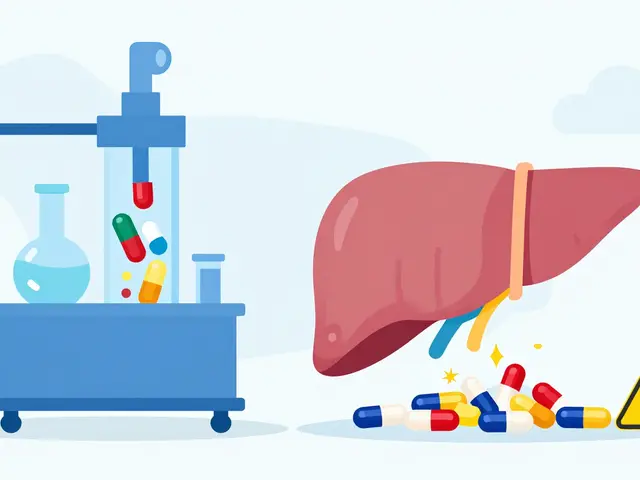
First-line therapy involves high-dose antithyroid medications. Doctors typically administer Methimazole is an antithyroid medication used to treat hyperthyroidism at a loading dose of 60-80 mg, followed by 15-20 mg every 4-6 hours. Alternatively, Propylthiouracil (PTU) is an alternative antithyroid drug often used in thyroid storm due to its ability to block T4 to T3 conversion may be given at 600-1,000 mg initially, then 200-250 mg every 4 hours.
2. Stopping Hormone Conversion
One hour after the antithyroid drugs are started, doctors administer potassium iodide (500 mg every 6 hours) or sodium iodide. This blocks the release of stored thyroid hormones and inhibits the conversion of T4 to the more active T3. Timing is crucial here-giving iodine before the antithyroid meds can actually worsen the situation by providing more raw material for hormone synthesis.
3. Controlling the Heart Rate
Beta-blockers, particularly Propranolol is a non-selective beta-blocker used to control tachycardia and reduce peripheral conversion of T4 to T3, are critical. Doses range from 60-80 mg orally every 4-6 hours or 1-2 mg intravenously every 5 minutes as needed. This helps bring the heart rate down from dangerous levels above 140 bpm.
4. Managing Fever and Inflammation
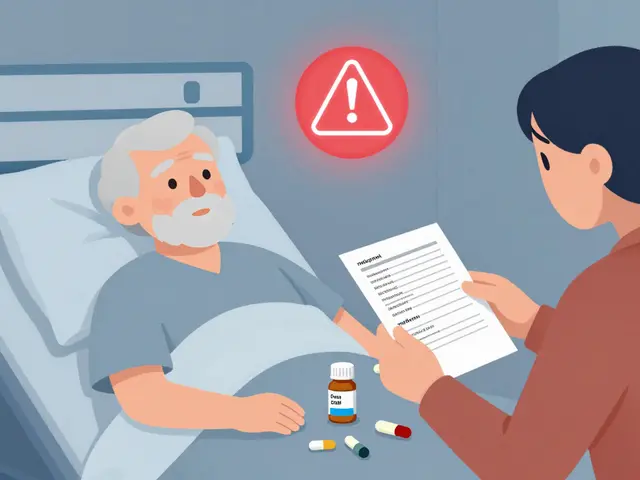
Fever management requires acetaminophen. NSAIDs like ibuprofen are avoided because they can displace thyroid hormones from binding proteins, increasing the amount of free, active hormone in the blood. External cooling measures are initiated when temperature exceeds 104°F. Corticosteroids, such as hydrocortisone (100 mg IV every 8 hours), are administered to prevent adrenal insufficiency and further inhibit T4 to T3 conversion.
5. Supportive Care
The ICU provides continuous cardiac monitoring, fluid resuscitation for dehydration (often requiring 2-3 liters of isotonic saline initially), and mechanical ventilation for patients with decreased consciousness. For severe, refractory cases, plasmapheresis (filtering the blood to remove hormones) has shown a 78% success rate in recent studies.
| Intervention Type | Primary Drug/Method | Mechanism of Action | Timing/Critical Note |
|---|---|---|---|
| Antithyroid Medication | Methimazole or PTU | Blocks new hormone synthesis | Start immediately upon suspicion |
| Iodine Solution | Potassium Iodide | Blocks hormone release & conversion | Must be given 1 hour AFTER antithyroid meds |
| Beta-Blocker | Propranolol | Lowers heart rate & blocks T4-T3 conversion | IV for rapid control if HR >140 |
| Corticosteroid | Hydrocortisone | Prevents adrenal crisis & reduces inflammation | Standard part of initial protocol |
| Supportive Care | Acetaminophen + Cooling | Reduces fever safely | Avoid NSAIDs |
Prognosis: What Determines Survival?
Despite modern treatment, the mortality rate remains between 8-25%. Higher rates (up to 30%) are seen in elderly patients and those with delayed diagnosis. The Burch-Wartofsky scoring system is used to assess severity. Scores above 45 are diagnostic for thyroid storm, with each point increase correlating to a 1.05 times higher mortality risk.
Key prognostic indicators include:
- Systolic Blood Pressure below 90 mmHg: Indicates cardiovascular collapse, associated with 50% mortality.
- Body Temperature above 105.8°F (41°C): Associated with 40% mortality.
- Severe CNS Symptoms: Coma correlates with 35% mortality.
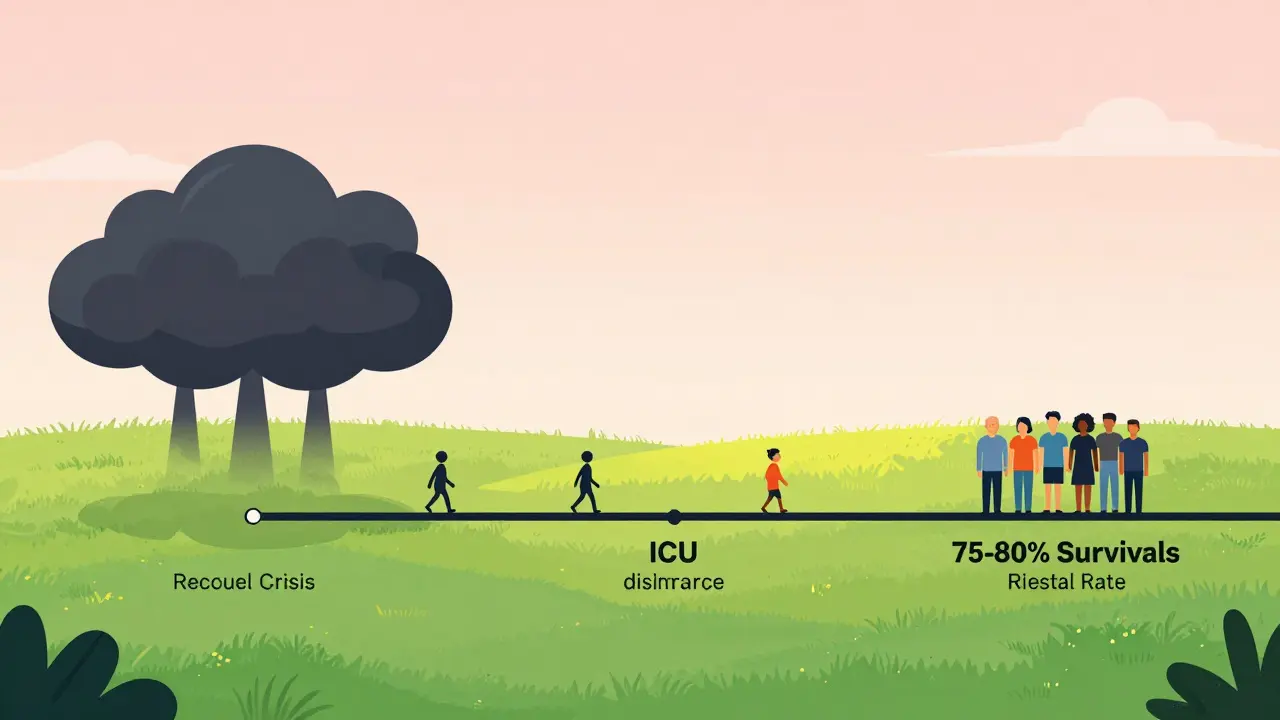
The most critical factor is time. Survival rates improve from 20% with treatment initiation after 24 hours to 75-80% when treatment begins within 6 hours of symptom onset. Patients with underlying cardiac conditions have a 2.3 times higher risk of fatal outcomes.
Recovery and Long-Term Outlook
Recovery from thyroid storm is a marathon, not a sprint. The average ICU stay is 7.8 days, with total hospitalization lasting around 14.3 days. Neurological recovery follows a predictable pattern: agitation resolves within 24-48 hours, confusion improves within 72 hours, and full cognitive recovery takes 7-14 days in survivors.
Long-term, 85% of survivors require lifelong thyroid hormone replacement therapy because the underlying hyperthyroidism is usually treated definitively with radioactive iodine or surgery. Only 15% achieve remission with antithyroid medications alone. Recurrence rates are low (2-3%) when underlying hyperthyroidism is properly managed, but jump to 25-30% in patients who do not adhere to follow-up care.
Is thyroid storm the same as hyperthyroidism?
No. Hyperthyroidism is a chronic condition where the thyroid produces too much hormone. Thyroid storm is an acute, life-threatening complication of hyperthyroidism where the body goes into a hypermetabolic crisis. Think of hyperthyroidism as a car running fast, and thyroid storm as the engine overheating and catching fire.
How quickly does thyroid storm develop?
Symptoms develop rapidly, often over hours rather than weeks or months. This rapid onset is what distinguishes it from typical hyperthyroidism and makes early recognition critical.
Can thyroid storm be prevented?
Yes, largely by managing underlying hyperthyroidism effectively. Adhering to prescribed medications, avoiding sudden stops in treatment, and seeking prompt care for infections or other stressors can significantly reduce the risk.
Why are NSAIDs avoided in thyroid storm?
NSAIDs like ibuprofen can displace thyroid hormones from binding proteins in the blood. This increases the level of "free" thyroid hormone circulating in the body, potentially worsening the storm. Acetaminophen is the preferred fever reducer.
What is the Burch-Wartofsky Point Scale?
It is a clinical tool used to diagnose and assess the severity of thyroid storm. It assigns points based on temperature, CNS effects, gastrointestinal/hepatic dysfunction, heart rate, and evidence of precipitating events. A score above 45 is highly suggestive of thyroid storm.